We can't prospect every day, so do we hire an SDR or buy one? In the AI SDR vs. human SDR choice, buy an AI SDR for steady daily prospecting at a fixed monthly fee, if someone can approve the messages. Hire a human when your deals need live judgment from the first conversation, and many teams end up using both.
By the end you will have a side-by-side comparison, a cost-per-meeting formula to fill in with your own numbers, and a simple rule for choosing.
AI SDR vs. Human SDR at a Glance
Here is the comparison in one place. The human column describes a typical SDR role. The AI column describes ZOROSDR, because those are the facts we can stand behind.
| Human SDR | AI SDR (ZOROSDR) | |
|---|---|---|
| Cost structure | Salary, benefits, tools, recruiting and manager time | Flat monthly plan: $99, $249 or $599, billed monthly, cancel any time |
| Ramp time | Hiring, notice period, onboarding, learning your offer | Five setup steps; the brand voice must be reviewed before a sequence goes live |
| Daily capacity | Limited by hours and attention | Runs every day within a credit budget you set, inside your plan's monthly allowances |
| Channels | Whatever the person can manage by hand | Email, LinkedIn, WhatsApp, Instagram DMs, website chat, SMS and AI calls in one sequence |
| Judgment on live calls | Strong: reads the room and adapts | Replies to leads always wait for a person |
| Control | Manager coaching and call reviews | A person approves, edits or skips every initial message |
Salary figures vary by market, seniority and role, so we don't quote one here. Use your own offer letter. For the software side we use ZOROSDR's published prices.
True Cost Breakdown: Salaries, Tech and Time
What a human SDR really costs
Salary is the line everyone sees. The fully loaded cost adds benefits, payroll costs, a laptop and phone, sales software seats, recruiting fees or hiring time, and the hours a manager spends coaching.
That last one is the cost most teams forget. A new SDR who needs weekly coaching is also costing you part of a manager.
What an AI SDR really costs
The software side is simpler to read. Here are the three ZOROSDR plans side by side.
ZOROSDR plan price per month (US dollars)
Plans are billed monthly, so twelve months of Starter comes to $1,188, Growth to $2,988 and Agency to $7,188. Every plan includes every feature, the built-in CRM and both prospect finders. The plans differ in seats, sending accounts and monthly allowances.
Starter suits a founder or a single rep: 1 seat, 2 sending accounts, 10,000 leads and 1,500 AI-written messages a month. Growth is for a team running several sequences: 2 seats, 6 sending accounts and 4,000 AI-written messages. Agency adds the client portal, 5 seats, 20 sending accounts and 3 client workspaces. The details are on the ZOROSDR pricing page.
Extra seats are $29 a month each on any plan. Prospect finding and contact details use credits, charged only when found, and every paid step shows the most it can cost before you confirm.
Here's the catch: the plan is not the whole bill.
Ramp Time: How Long Until Each Option Produces
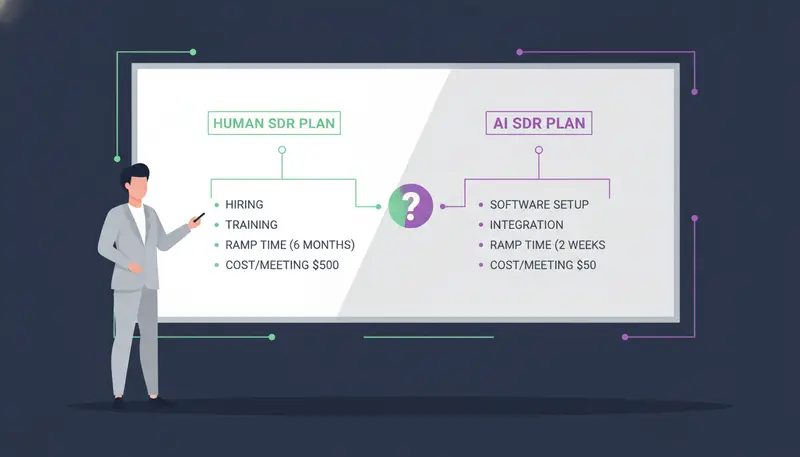
A human SDR has a long runway before the first meeting. You recruit, wait out a notice period, onboard, teach the offer, build a list and write the first messages. All of that happens before a single prospect hears from you.
An AI SDR skips the hiring. It still needs setup, and that is where your effort goes.
- 1Basicschoose the goal of the sequence, such as a meeting, a reply or an accepted LinkedIn connection, and pick the brand voice the AI writes as.
- 2Audiencepick a list, or let new matching leads be added automatically while the sequence is live.
- 3Messageslet the AI suggest steps, then read them and adjust. Nothing changes until you save.
- 4Send fromconnect the mailboxes and accounts the messages go out from.
- 5Review and turn onthe checklist at the end shows what is still missing.
We won't put an hour count on this, because it depends on how much you already have written down. What we can say is that nothing goes live until the brand voice is marked as reviewed.
Sending matters too. Messages go out from your own connected accounts, such as Gmail, Outlook or LinkedIn, so your outreach builds on your own domain's reputation. Built-in checks cover SPF, DKIM and DMARC, with automated bounce handling.
A short setup is only useful if the first week of messages is worth sending. That is why the prep matters more than the clock.
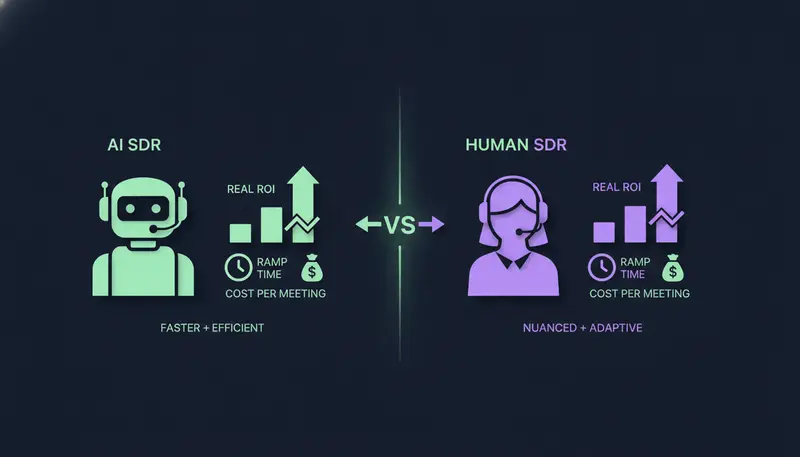
AI SDR vs. Human SDR: Real ROI, Ramp Time & Cost Per Meeting
This is where the two options meet on one scale. Cost per meeting folds cost and ramp time into a single number, and ROI tells you whether that number is worth paying.
The cost-per-meeting formula
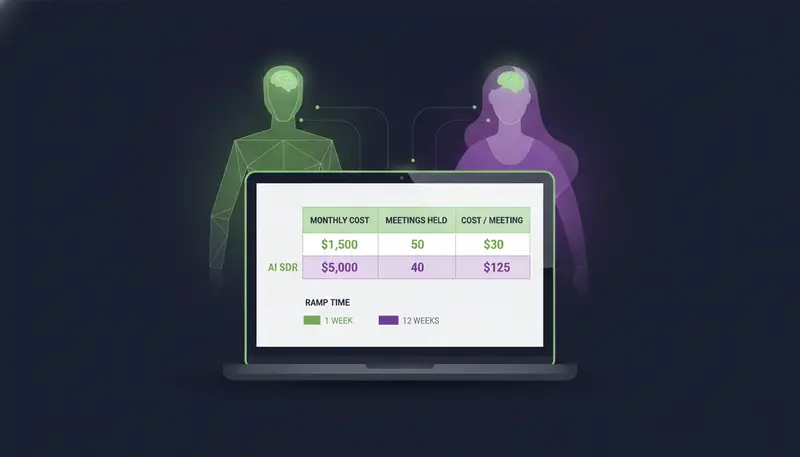
Cost per meeting is total monthly cost divided by meetings actually held. The trick is being strict about both halves.
- 1Add up every monthly costsalary and benefits for a human, or plan, extra seats and credits for software. Include the hours of the person approving and coaching.
- 2Count only meetings that happened and fit your buyer profile, not meetings that were merely booked.
- 3Divide cost by meetings for the same month.
- 4Repeat for a full quarter, because a single month can mislead you in either direction.
- 5Weigh the result against what a meeting is worth to you.
We can't tell you how many meetings either option will book for you, and no honest vendor can. Your market, offer and list quality decide that. What you control is measuring both the same way.
How to calculate ROI without fooling yourself
ROI is revenue from won deals minus total cost, divided by total cost. The problem is timing. If your sales cycle is long, revenue shows up months after the work.
So track the earlier signals too: replies, meetings held and leads moving through stages. A built-in CRM next to the outreach makes this easier than stitching together several tools, and ZOROSDR includes one on every plan at no extra cost.
Before you compare ROI
- Write down your average deal value
- Write down your close rate from meeting to won deal
- List every cost, including approval and coaching time
- Define what counts as a qualified meeting
- Track replies and meetings by channel
- Set a review date after at least one full quarter
For a deeper look at when the numbers tip, read is an AI SDR worth it.
Can You Trust an AI SDR With Your Name?
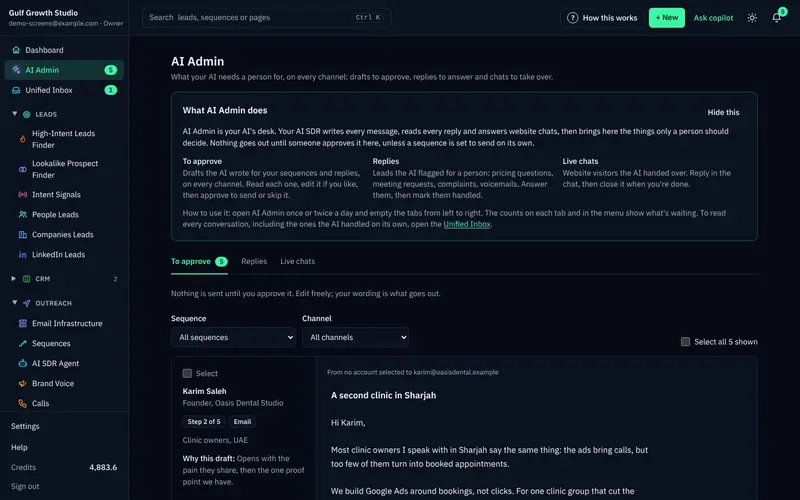
This is the fear we hear most: the AI sends something wrong in our name. The design answer is control. Every initial message lands in your inbox as a draft, and nothing goes out until a person approves, edits or skips it.
Replies to leads wait for a person too. The AI is locked to your brand voice and your own facts, and when it doesn't know something it says it will confirm instead of inventing an answer.
You can read how this works on the guardrails page.
When a Human SDR Wins
A human SDR is the better choice when the first conversation is the sale. That includes complex deals with several stakeholders, accounts where one thoughtful phone call matters more than volume, and markets where relationships come before anything else.
It also fits when you have a manager with real time to coach. A well-coached SDR learns things no software picks up from a knowledge base.
When an AI SDR Wins
An AI SDR wins when the problem is consistency and time. If you are a founder or a single rep who can't prospect every day, software that finds prospects, drafts messages and follows up across channels covers ground you can't.
It also fits teams whose outreach is generic and ignored, because the AI writes each message fresh from your voice and what it knows about the lead. And it fits agencies running outreach for many clients, where headcount is the bottleneck. The Agency plan includes a client portal and 3 client workspaces, with more at $39 a month each.
The Hybrid Model: People for Judgment, Software for Volume
The either-or framing hides the most practical answer. Let the software find prospects, draft messages and run follow-ups. Let people approve, answer replies, take calls and close.
The free trial makes this easy to test, because every new workspace starts with a sandbox to judge lead quality before you spend anything.
Our comparison of AI SDR vs. SDR cost, output and when to use each goes through the split of work in more detail. If you want a plan for the trial itself, try this one.
- 1Pick one audienceyour best customers are a good model for who to find.
- 2Set up one short sequence on the channels you already use.
- 3Approve the first drafts yourself and edit anything that doesn't sound like you.
- 4Note every reply and what kind it was.
- 5Compare what you learned against what a hire would cost you in time.
Frequently asked questions
How much does a human SDR cost compared with an AI SDR?
A human SDR costs salary plus benefits, tools, recruiting and management time, and the figure depends on your market. ZOROSDR costs $99, $249 or $599 a month depending on the plan, billed monthly, plus the time of the person who approves messages.
Does an AI SDR replace a human SDR?
Not completely. A person approves every initial message and answers every lead reply. The AI handles finding prospects, drafting and sequencing.
How long does it take to set up an AI SDR?
Setup is five steps: Basics, Audience, Messages, Send from, and Review and turn on. The time depends on how much you have ready, and the brand voice must be reviewed before a sequence can go live.
Can I try it before deciding?
Yes. ZOROSDR offers a 14-day free trial of every tool with no card needed. New workspaces start with 100 AI-written messages, 25 prospect-finding credits and 10 WhatsApp messages.
Summary
A human SDR brings judgment and relationships, and costs a salary, management time and a ramp period. An AI SDR brings daily consistency across channels for a flat monthly plan, and needs a person to approve messages and answer replies. Measure both by cost per meeting over a full quarter.
The lowest-risk next step is to start the 14-day free trial and run your own numbers.