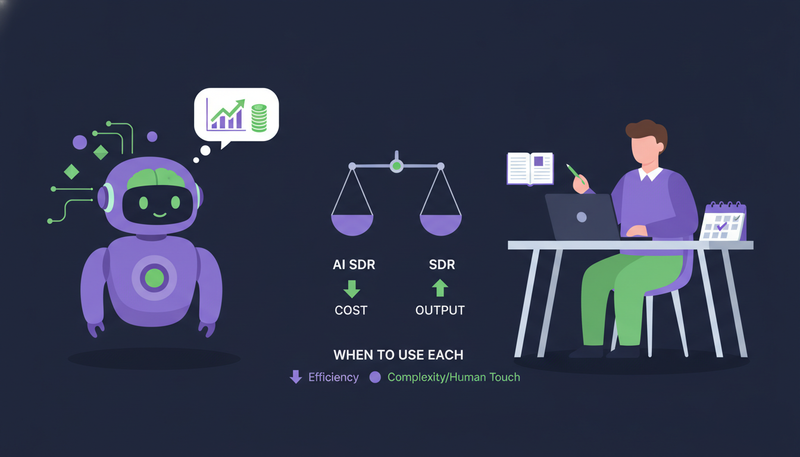
You can't prospect every day, your outreach sounds like everyone else's, and hiring someone to fix it feels like a big bet. On the ai sdr vs sdr question, the direct answer is this: an AI SDR does the daily, repetitive work for a monthly subscription, a human SDR brings judgment and live conversation for a salary, and many teams get the most from both, with a person approving what the AI prepares.
By the end you'll know what each one costs to run, what each can produce and when to use which.
What is the difference between an AI SDR and a human SDR?
A sales development representative, or SDR, finds prospects, contacts them and keeps the conversation going until a meeting is booked. For the full role, see what a sales development representative does.
A human SDR does that by hand. They research, write, send, follow up and answer replies.
An AI SDR does the same job in software. It finds people, writes in your voice, runs a sequence across channels, reads each reply and suggests an answer.
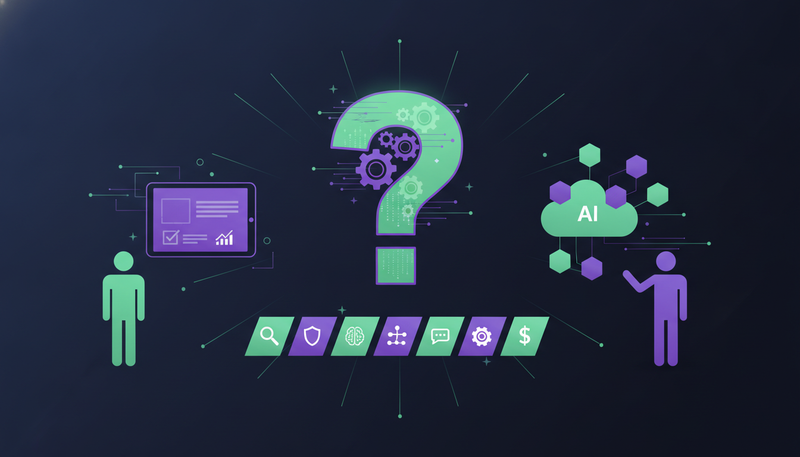
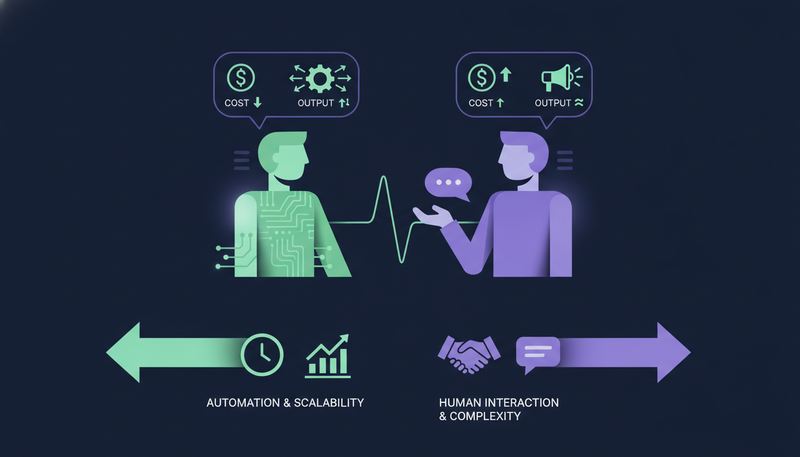
The goal is identical. What changes is who does the repetitive part and who makes the decisions.
| Human SDR | AI SDR | |
|---|---|---|
| Daily prospecting | Done by hand, in the hours the person works | Runs every day within a credit budget you set |
| Writing | Personal, one message at a time | Written fresh for each lead from your brand voice and the facts you gave it |
| Channels | Whatever tools the person juggles | Email, LinkedIn, WhatsApp, Instagram, SMS, website chat and AI calls in one sequence |
| Judgment | Strong on tone, timing and odd situations | Follows your rules and hands decisions to a person |
| Getting started | Recruiting, hiring and training | Connect your accounts, set your brand voice and review it |
Notice the last row. A person needs weeks of ramp-up before they are fully productive, while software needs a brand voice you have read and approved. Neither start is free of effort, but the effort is different.
How much does an AI SDR cost compared with a human SDR?
Start with a gap: we can't tell you what a human SDR costs you. Pay depends on your market, the seniority and the kind of deal you sell. What we can do is list what belongs in the sum.
What to add up for a human SDR
- Base salary and any commission
- Benefits, visa and onboarding costs where they apply
- Software seats for CRM, email, LinkedIn tools and data
- Manager time for coaching and reviewing messages
- Recruiting time or an agency fee
- The months before the person is fully productive
- What happens to your pipeline if they leave
Now the software side. ZOROSDR has three plans, and the built-in CRM comes at no extra cost on every plan.
ZOROSDR plans, price per month in USD
Starter is $99 a month, Growth is $249 and Agency is $599. See the pricing for what each plan includes.
Some steps use credits. In the Lookalike Prospect Finder, counting costs 1 credit and ranking 100 companies costs 10 credits. Importing a person's full profile, LinkedIn and work email costs at most 1 credit each. Every paid step asks first and shows the most it can cost, and it never spends more.
Put your own total for a person next to those numbers. That comparison is better made with your figures than with anyone's average.
What can an AI SDR and a human SDR actually produce?
Output is slippery, so start with something measurable: capacity.
A person can only research, write and send during the hours they work. They also take holidays and, eventually, move on. An AI SDR agent runs every day within a credit budget you set, and sequences send within each lead's local working hours.
Both are held back by the same thing: safe daily platform limits. ZOROSDR respects them to protect your accounts, so sending more is not always on offer, and it shouldn't be.
Here's the catch: more messages are not more meetings. Whether anyone replies depends on whether you wrote to the right person with something relevant. We can't promise replies or meetings, and neither should any tool.
How does an AI SDR find the right people?
ZOROSDR has two finders. The Lookalike Prospect Finder looks for more companies and people like your best customers, scores each person on role and company and shows the reason for each score. The High-Intent Leads Finder looks for people at companies in a buying moment.
Your own company, your customers and everyone already in your workspace are left out, so you don't pay to rediscover people you already know.
What does a human SDR add to the list?
Context. A person may know that a company just lost its main contact, or that a lead looks right on paper but is wrong in practice. That kind of call is hard to automate.
Where does a human SDR still win?
A person wins wherever the work means reading a room.
Live discovery calls. A prospect who pushes back in a way no script covers. A senior buyer who wants to talk to someone who understands their account. The decision to leave a lead alone even though it looks perfect.
An AI SDR doesn't replace the person who closes. In ZOROSDR, replies to leads always wait for a person, and booked meetings move the lead to the next stage. The AI prepares the ground and a human takes the meeting.
The mistake to avoid is assuming AI means no people. A better framing is that the AI takes the tasks nobody has time for, and people keep the ones that need a judgment call.
Can an AI SDR send something wrong in your name?
A common fear is blunt: what if the AI sends something wrong in my name? It's fair, and the answer lies in how the system is built, not in a promise.
Which guardrails matter most?
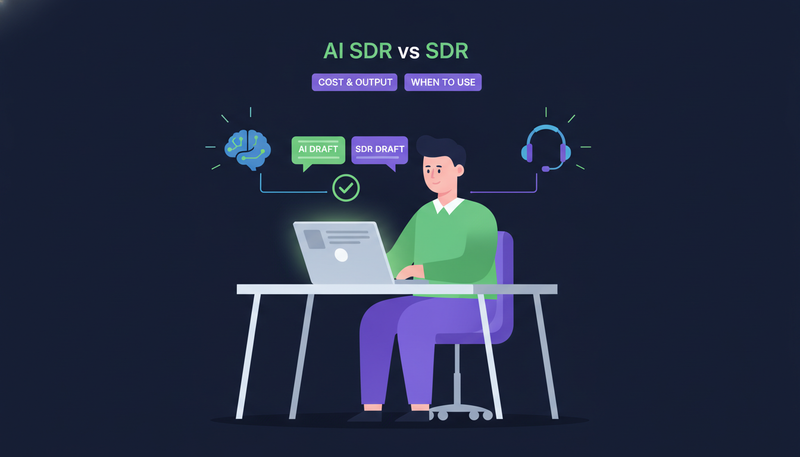
- Every first message lands in your inbox as a draft. Nothing goes out until a person approves, edits or skips it.
- The AI writes from your brand voice and the knowledge you gave it. If it doesn't know a fact, it says it will confirm instead of inventing an answer.
- Requests such as 'stop' or 'unsubscribe' are caught by system-level rules before the AI even reads the reply.
- Messages go out through your own connected accounts, such as Gmail, Outlook and LinkedIn, so they carry your own domain, not a shared server's.
Built-in checks for SPF, DKIM and DMARC alignment, plus automated bounce handling, help protect deliverability. The guardrails page covers each rule in more detail.
When should you use an AI SDR, a human SDR, or both?
There is no single right answer, but there is a sensible order to think it through.
- 1Count the hoursWrite down how many hours a week your team spends prospecting versus selling. If prospecting is crowding out selling, that is the work to hand to the AI.
- 2Look at your dealShorter, repeatable sales suit an AI-prepared sequence. Long, complex sales need a person involved earlier.
- 3Name the approverPick who reads drafts in AI Admin once or twice a day. Nothing is sent until that person approves.
- 4Choose the channelsStart with the channels your buyers actually answer, then add others to the same sequence.
- 5Review and adjustLook at who replied and how well the leads fit, then tighten the targeting or the voice.
What suits a founder or a small team?
If you have no time and no headcount for daily prospecting, an AI SDR is the lower-commitment start. You keep control by approving drafts, and you keep the conversations that matter.
What suits a larger sales team?
If you already have SDRs, the AI can take over the research and first drafts so people spend their hours on replies, calls and meetings. Your leads, conversations and follow-ups also sit in one inbox and one built-in CRM instead of several tools.
Weighing a third route? Read AI SDR vs hiring an SDR vs outsourcing to an agency.
How do you test an AI SDR before you commit?
Try it on a small, real list. The free trial gives you every tool for 14 days with no card needed, and you can cancel at any time. Every new workspace also starts with sandbox credits.
Then judge it the way you would judge a new hire: by the work, not the pitch.
What to check during a trial
- Do the drafts sound like you, and only state facts you gave the AI?
- Are the leads from the finders a real fit for your buyers?
- Are replies sorted into interested, question, objection, not now or stop?
- Can you clear your approvals in a few minutes a day?
- Do the domain checks for SPF, DKIM and DMARC pass?
What does AI SDR vs SDR mean for agencies?
For agencies the pain is staffing: running outreach for every client takes too many people. One person per client does not scale.
The agency plan includes a client portal under your own brand and domain, with 3 client workspaces included and more at $39 a month each. Clients can work in their own inboxes and LinkedIn, see analytics and edit sequences, while billing, team and integration settings stay with you. Clients never see a bill, and pausing a client stops everything without deleting anything. See how it works for agencies.
Frequently asked questions
Is an AI SDR better than a human SDR?
Neither is better in every case. An AI SDR is stronger at daily, repetitive prospecting and follow-up. A human SDR is stronger at judgment and live conversations. Many teams use the AI for the volume and a person for the replies and meetings.
Can an AI SDR replace a human SDR?
It can take over the repetitive work, but in ZOROSDR a person still approves every first message and answers replies from leads. It changes what your people spend time on rather than removing them.
How much does an AI SDR cost per month?
ZOROSDR plans are Starter at $99 a month, Growth at $249 and Agency at $599. Some steps, such as finding and importing prospects, use credits, and each paid step shows the most it can cost before it runs.
Will an AI SDR send messages without my approval?
No. Every first message lands in your inbox as a draft, and nothing is sent until a person approves, edits or skips it. Replies to leads also wait for a person.
Summary
An AI SDR and a human SDR do the same job in different ways. The AI handles the daily volume at a plan price, and a person brings judgment, calls and the final say. Count your own costs, check the guardrails and test on a small list. When you're ready, start the free trial and see whether the drafts sound like you.