You need more conversations with the right buyers, but nobody on your team has time to prospect every day. A sales development representative is the person who fixes that: they find prospects, contact them and hand the interested ones to a closer.
This guide explains the role, the skills it takes, what a typical day looks like and how teams now share the work between people and software.
What is a sales development representative?
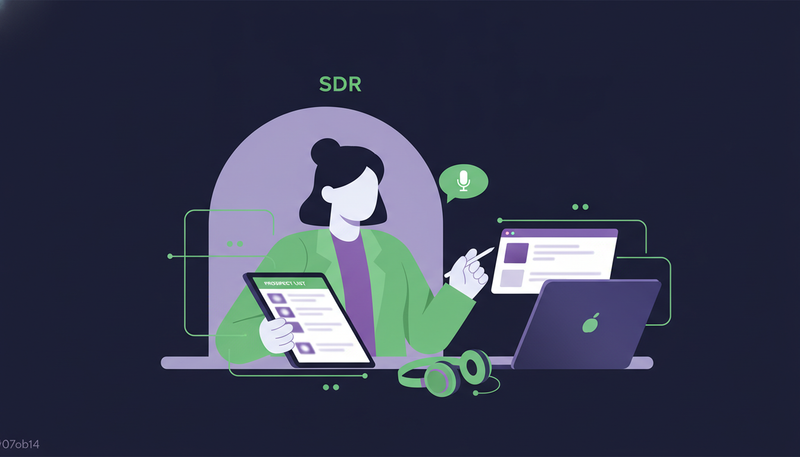
A sales development representative is the person who runs the first stage of selling. They find potential customers, reach out to them and decide whether each one is worth a salesperson's time.
You will also see the title written as SDR, sales development rep or, in smaller companies, lead qualifier. The label changes. The job stays the same: open the door, then hand over.
There are two common types. Outbound SDRs contact people who have not asked to hear from you. Inbound SDRs follow up with people who filled in a form, started a trial or replied to a message.
In a small company the founder often does this work first. A dedicated SDR appears when the founder's calendar fills with closing and prospecting keeps slipping.
What does a sales development representative do all day?
Most of the job is a loop. Find the right person, say something relevant, follow up, read the reply and decide what happens next.
- 1Choose who to contactWork from your ideal customer profile, so the list holds people who could buy rather than people who are merely easy to find.
- 2Research each leadRead about their company, role and any recent change, so the first message has a real reason behind it.
- 3Reach outSend the first message on the channel the buyer actually uses, whether that is email, LinkedIn, phone or WhatsApp.
- 4Follow upMany people do not answer the first message, so plan a short run of polite, useful follow-ups.
- 5Qualify and hand overConfirm fit, interest and timing, then book a meeting for the account executive.
Then there is the work nobody sees. Updating the CRM, tagging replies, removing people who said stop and writing notes the closer can read before the call.
The handover is where most teams slip. A meeting with no notes forces the account executive to start from zero, and the buyer notices.
SDR vs BDR vs account executive: what is the difference?
Titles overlap, so teams argue about them. Here is the usual split between an SDR and the person who closes.
| Sales development representative | Account executive | |
|---|---|---|
| Main goal | Start conversations and book qualified meetings | Run demos and close deals |
| Stage of the sale | The beginning | The middle to the end |
| Daily activity | Research, messages, calls, follow-ups | Demos, proposals, negotiation |
| Judged on | Qualified meetings handed over | Deals won |
| Works closely with | Marketing and the lead list | Buyers and decision makers |
A business development representative (BDR) is often the same role. Some companies use BDR for outbound work aimed at larger accounts and SDR for inbound. Check the job description rather than the title.
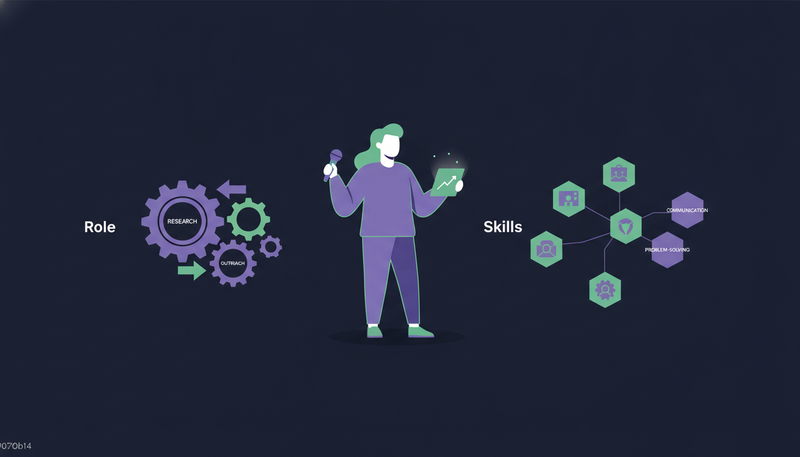
Which skills does a sales development representative need?
The job rewards habits more than personality. A quiet, careful person can do it very well.
Writing comes first. A message the reader understands in ten seconds beats a clever one. Curiosity comes next, because good research is what makes a message feel personal rather than generic.
Then organisation and resilience. An SDR juggles many leads at different stages and hears no far more often than yes.
Skills to look for in an SDR
- Clear, short writing in the company's voice
- Curiosity about the buyer's business
- Discipline with lists, notes and follow-up dates
- Calm when a lead says no or says nothing
- Comfort on the phone and on LinkedIn
- Honesty about what the product does and does not do
- Willingness to learn from every reply
Listening is the skill people forget. A reply that says 'not now' is different from one that says 'not for us', and the next move depends on telling them apart.
What does a day in the life of an SDR look like?
No two teams match, so treat this as a typical pattern, not a rule.
Morning: replies, research and first messages
The day starts with the inbox. The SDR answers the warm replies first, then reviews new leads and sends the first batch of messages, each with a reason to write.
Midday: calls and follow-ups
Calls and LinkedIn work often fit here, since many buyers are at their desks. The SDR also follows up with people who read a message but did not answer.
Afternoon: qualifying and notes
More replies arrive. Some are interested, some are questions, some are objections, and some say not now or stop. The SDR answers, books meetings and updates the CRM so the account executive has the full story.
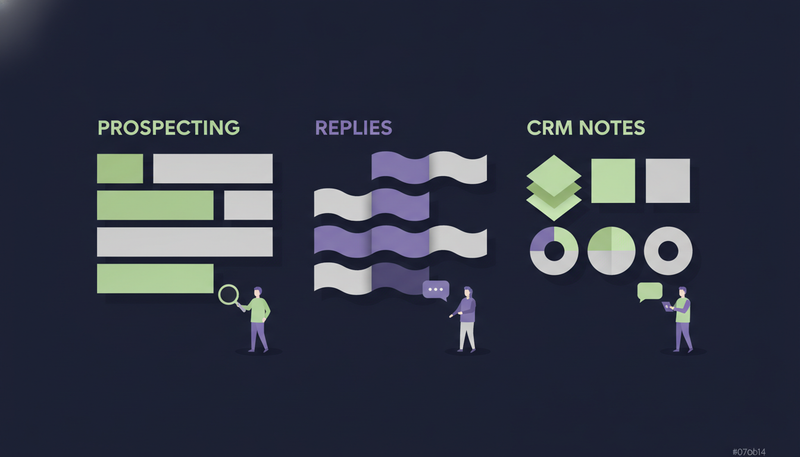
Notice how much of that day repeats. Finding leads, drafting a first line and logging notes take hours, yet none of them needs the SDR's judgment. The conversations do.
Which tools does a sales development representative use?
The usual kit is a CRM, an email account, LinkedIn, a phone line and a spreadsheet of leads. In the Gulf, WhatsApp often joins the list.
The tools themselves are fine. The trouble starts when leads, conversations and follow-ups live in five places and nobody sees the whole picture. Replies get missed, and a lead who said stop gets another message.
Can AI do the work of a sales development representative?
Part of it, yes. The repetitive half of the job (finding people, drafting messages, following up and sorting replies) is what software handles well. The judgment half still needs a person.
ZOROSDR is built on that split. It has two prospect finders: the Lookalike Prospect Finder, which looks for more companies and people like your best customers, and the High-Intent Leads Finder, which looks for people at companies in a buying moment. It then writes in your voice and follows up across channels. You can see the full feature list.
The safety question comes up every time, and it should. Every first message lands in your inbox as a draft, and nothing goes out until a person approves, edits or skips it. Replies to leads always wait for a person too.
The AI writes only from the facts you gave it, and if it does not know something it says it will confirm. Stop and unsubscribe requests are caught by system rules before the AI even reads the reply. Read how the guardrails work.
How much does it cost to add SDR capacity?
Hiring an SDR means a salary, a manager, tools and time to learn your product. Costs vary by market, so we will not quote a figure here. For a side-by-side view, read AI SDR vs hiring an SDR vs outsourcing.
Software is priced by the month. ZOROSDR has three plans:
ZOROSDR plans, price per month in US dollars
Agency is built for agencies running outreach for several clients, with a client portal under the agency's own brand and domain. A CRM is built in at no extra cost on every plan. See the pricing for what each plan includes.
How can you try an SDR workflow before you hire?
The cheapest test is a small one. A new ZOROSDR workspace starts with credits you can use to check lead quality before you spend anything.
That is enough to run one narrow audience through one sequence and read every draft before it goes out. You can cancel at any time.
When does a human SDR still make sense?
A person is the better choice when deals are large and slow, when relationships carry the sale, or when each account needs deep, hand-built research. Software does not replace a good conversation on the phone.
Software fits when your team is small, when nobody has time to prospect every day, or when you are an agency and running outreach for every client takes too many people. Many teams will mix the two, with software doing the legwork and a person doing the talking.
If you go the software route, setup is short:
- 1Tell it who you sell toName your best customers or describe your ideal customer in a sentence, and it finds companies and people like them.
- 2Let it learn your voiceIt reads your website and drafts your offer, proof points and tone. You review it once.
- 3Approve every wordEach message arrives in your inbox as a draft. Approve, edit or skip.
- 4Answer the repliesEvery reply is read and sorted, and a suggested answer waits for you.
Frequently asked questions
What does a sales development representative do?
An SDR finds prospects, contacts them, follows up, qualifies their interest and books meetings for an account executive. They handle the start of the sales process, not the close.
What is the difference between an SDR and a BDR?
Often nothing. Some companies use BDR for outbound work aimed at larger accounts and SDR for inbound or smaller ones. Check the job description to see what the role really covers.
What skills make a good sales development representative?
Clear writing, curiosity about the buyer, organisation, resilience and good listening. Product knowledge helps, and honesty about the product matters more than a polished pitch.
Can AI replace a sales development representative?
AI can handle the repetitive work: finding leads, drafting messages and sorting replies. In ZOROSDR a person still approves every message and answers every reply. No tool can promise replies or meetings.
How much does ZOROSDR cost?
There is a 14-day free trial of every tool with no card needed. After that, Starter is $99 a month, Growth is $249 and Agency is $599.
Summary
A sales development representative opens sales conversations: research, outreach, follow-up and qualifying, then a clean handover to the closer. The skills are mostly writing, curiosity and steadiness, and much of the daily routine can now be handled by software with a person in control.
If you want to see that on your own leads, start the 14-day free trial or book a demo.