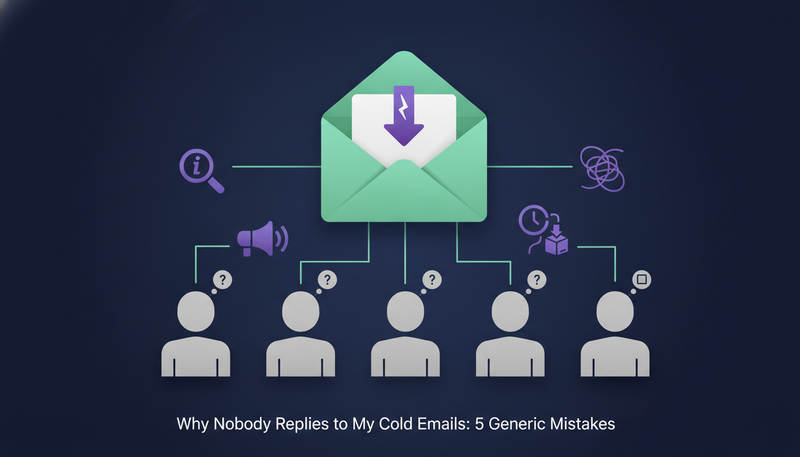
You wrote the email, picked the list and pressed send. Then nothing came back. If you keep asking why nobody replies to my cold emails, the usual answer is that the message could have gone to anyone, so nobody felt it was meant for them.
By the end of this article you'll know the five generic messaging mistakes behind most ignored outreach, how to spot each one in your own drafts, and how to fix them without writing every message from scratch.
Why nobody replies to my cold emails: the short answer
Most cold emails are ignored because they read like templates. The lead sees a generic opener, a vague claim and a big ask, and decides within seconds that it isn't for them.
That isn't the only cause. Deliverability, list quality and timing all play a part, and nobody can honestly promise you replies. But messaging is the part you control fully, so it's the right place to start.
Here's the catch: generic messaging rarely feels generic to the person who wrote it. You know your offer well, so every sentence seems clear. The reader has none of that context, only a few seconds and a full inbox.
'Our outreach is generic and nobody replies' is how many sales teams describe it. The five mistakes below are the usual reasons, and each one has a fix you can apply this week.
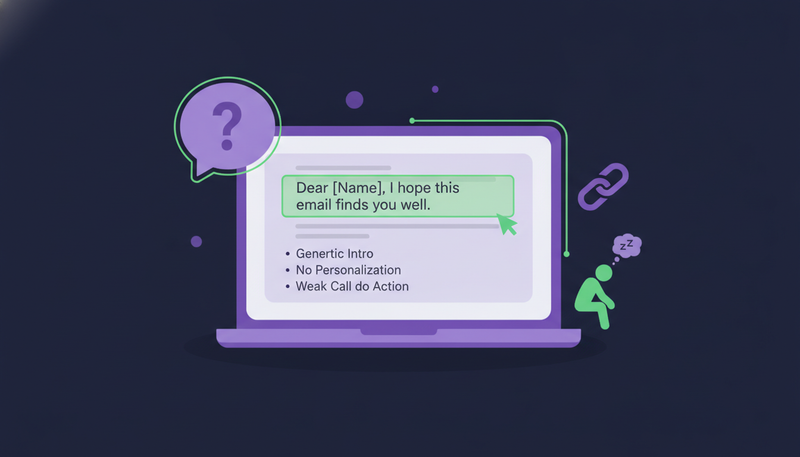
Mistake 1: Opening with your company instead of the lead
The first line is often the only line a busy person reads. If it covers your company, your team or how long you've been around, you've spent it on something the lead never asked about.
Put the two kinds of opener side by side and the gap is obvious.
| Generic opener | Specific opener | |
|---|---|---|
| What it talks about | Your company and its strengths | The lead's role, market or problem |
| Typical first words | 'We are a leading provider of...' | 'Teams that sell to...' followed by one real pain |
| What the reader thinks | Another pitch | This might be about me |
| Effort to write | Low: one template for everyone | Higher: one angle per group of leads |
You don't need a paragraph of flattery to fix it. One pain from the lead's world, one line on how you help and a soft question is enough. That is the same kind of brief you can give the AI for each step in a ZOROSDR sequence.
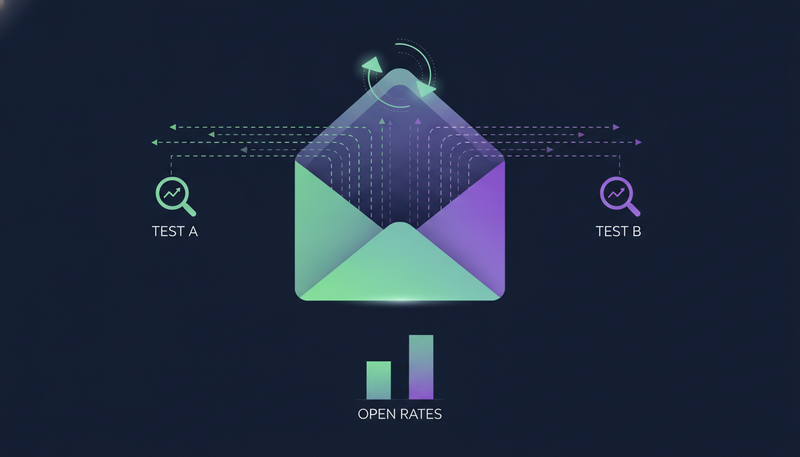
The subject line matters too, because it decides whether the opener gets read at all. If you want to test a few, the guide to 75 cold email subject lines and how to test open rates is a good starting point.
Mistake 2: Sending a sharp message to the wrong list
A well-written email to the wrong person is still a generic email. The wording can be tight and it still won't land if the lead has no reason to care.
This mistake hides well because the copy looks fine. The problem sits upstream, in who you chose to write to.
There are two sensible ways to build a list with a reason behind it. You can start from your best customers and look for more companies and people like them, which is what the Lookalike Prospect Finder does. Or you can look for people at companies in a buying moment, which is the job of the High-Intent Leads Finder.
Either way, you begin with a reason to write rather than just a job title.
You can also write your targeting down as rules, the way you'd brief a new salesperson. 'Only contact people who...' and 'Never contact...' lines screen outbound leads, so the list stays honest as it grows.
Mistake 3: Treating one email as the whole test
One email, one channel, one moment. The lead may have been travelling, in meetings or simply busy. Silence after a single message tells you very little.
The lazy fix is to send the same text again with a nudge on top. That adds nothing. A better follow-up brings one new point, a different angle or a simpler question.
A sequence lets you plan that on purpose. It has steps across channels, with waits and conditions, and each step is written for that lead and that channel. You can add up to 12 steps, plus up to 5 email or LinkedIn follow-ups.
The next step is where most teams slip: they plan the steps but give every one the same job.
- 1Pick the first channelstart where your buyer is most likely to read, usually email, then add LinkedIn or another channel where it fits.
- 2Give each step a jobthe first names the pain, the second adds one new point, the third asks a simpler question.
- 3Set the waitsleave days between steps so you don't crowd the lead.
- 4Add a branchcheck whether they accepted your LinkedIn invite or replied, and send them down different paths.
- 5Stop on a replythe sequence should end for a lead the moment they reply, opt out or book a meeting.
WhatsApp and SMS go only to people who agreed to them, and a first WhatsApp Business message needs an approved template. Plan those steps for contacts who opted in, not for a cold list.
For how many follow-ups to send and when, read cold email follow up: how many, when and 12 templates.
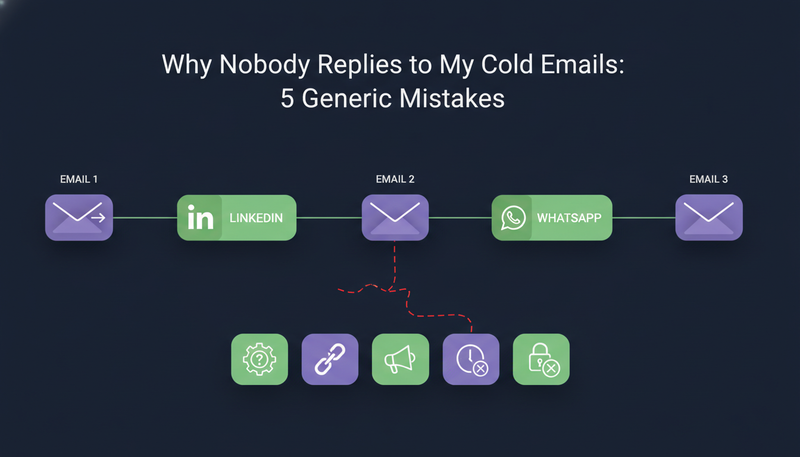
Mistake 4: Making claims you can't back up
Generic messages lean on big, vague claims: we help companies grow faster, we're trusted by the best. Nobody can check them, so nobody believes them.
The opposite error is just as common: fake personalisation. A line like 'I saw your team is expanding' only works if it's true.
The extra risk with AI-written outreach
Teams say it plainly: 'We're afraid an AI will send something wrong in our name.' It's a fair worry.
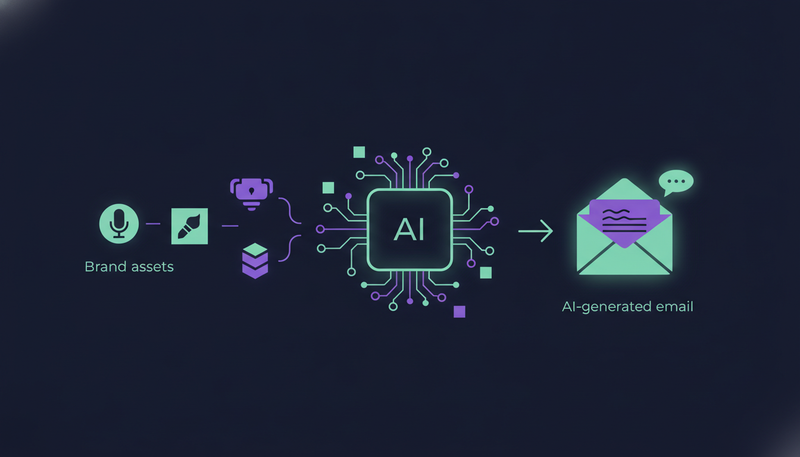
ZOROSDR writes only from your brand voice, your knowledge base and news. If it doesn't know a fact, it says it will confirm rather than make one up. Every message lands in your inbox as a draft, and nothing goes out until a person approves, edits or skips it. Replies to leads always wait for a person.
If drafts keep missing, don't rewrite the same one again and again. Add the missing fact to the brand voice's knowledge. The guide on how AI learns your brand voice for cold emails explains how, and the guardrails page covers approval, facts-only writing and opt-outs.
Mistake 5: Asking for a meeting in the first line
A first message that asks for 30 minutes of someone's week asks a lot from a stranger. They don't know you, haven't seen your work and have no reason to give up the time.
A smaller ask is easier to say yes to: a question they can answer in a line, or whether it's worth sending a little more detail.
Match the ask to the relationship. A lead who replied 'tell me more' is ready for a time slot. A lead who hasn't said anything is not, so save the calendar link for when they show interest.
A five-minute check before you send
Run every draft through the same list. It takes less time than writing the draft did.
Draft check
- The first line is about the lead, not about us
- I can say why this person and why now
- Every fact in it is one I can prove
- There is one ask, and it is small
- The length fits the channel
- A follow-up adds something new, not the same text again
- Anyone who says stop is removed from every channel
Then read it once as the lead would. If you can't tell within two sentences why it was sent to you, rewrite it.
How to fix generic messages when you have no time to write each one
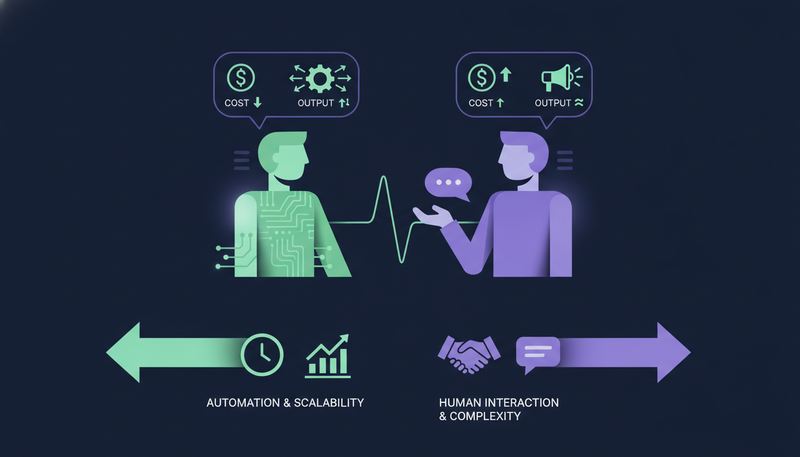
The honest reason most outreach goes generic is time. 'We don't have the time or people to prospect every day' is how many teams put it, and a template is the quickest way out.
The fix is structure, not typing faster. Set up your brand voice once from your website and knowledge. Give each sequence step a short brief. Let the AI draft one message per lead and channel, then read each one before it goes out.
In AI Admin you can filter by sequence or channel and approve up to 25 drafts at a time, rewrite 10 or skip 100. Review stays quick without becoming a blind click.
Those sandbox credits are there so you can judge message and lead quality in your own market before you pay anything.

When the message is fine and nobody still replies
Sometimes the copy isn't the problem. If messages never reach the inbox, nobody can reply to them.
Check the basics: SPF, DKIM and DMARC alignment, address checks and bounce handling. ZOROSDR runs those domain health checks and sends from your own connected accounts, such as Gmail or Outlook, not a shared server. A brand-new inbox that sends a lot from day one also gets flagged, so warm it up first.
Frequently asked questions
How many follow-ups should I send?
There's no number that suits everyone. In ZOROSDR you can add up to 5 email or LinkedIn follow-ups at a tight, standard or relaxed pace, each with a brief you can edit. Each one should add something new.
Is it safe to use AI to write cold emails?
It is when a person stays in control. ZOROSDR drafts every message for approval, writes only from the facts you gave it, and always holds replies to leads for a person.
What should I put in the first cold email?
One pain from the lead's world, one line on how you help and a soft question. Leave the meeting request for when they show interest.
Could deliverability be the reason nobody replies?
Yes. Check SPF, DKIM and DMARC, handle bounces, warm up new inboxes and stay within daily sending limits. If the email never reaches the inbox, the wording doesn't matter.
Summary
Cold outreach gets ignored when it could have been sent to anyone. Fix the opener, the list, the sequence, the claims and the ask one at a time, and read every draft before it goes out. To try it on your own market, start the 14-day free trial, or book a demo if you'd rather talk it through first.