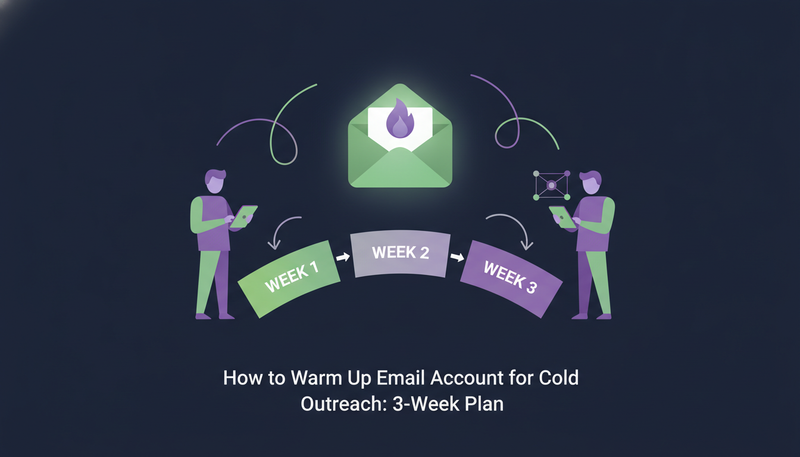
You sent a careful first email, got silence, and now you're unsure whether a second one helps or just annoys. A well-built cold email follow up does help, as long as it is short and says something new. Send the first email plus three or four follow-ups over about three weeks, and stop the moment the person replies.
Below you'll find a simple schedule, a rule for what each follow-up should say, and 12 templates to adapt to your own voice.
How many follow-ups should you send?
Three or four follow-ups after the first email is a sound default for B2B outreach. That makes four or five emails in total, which is persistent without becoming pressure.
Treat that as a working rule from practice, not a law. Your market, your offer and how well your list fits will move it. A small, well-matched list of founders usually suits fewer, more personal follow-ups. A broader list can carry a longer, more spaced-out sequence.
Here's the catch: more follow-ups do not repair a weak first email or the wrong list. If the opening is generic, a fifth reminder of it won't land any better. Fix the targeting and the first message, then add follow-ups.
Your tool sets a ceiling too. In ZOROSDR you can add up to 5 email or LinkedIn follow-ups to a sequence, at a tight, standard or relaxed pace, and each one has a brief you can edit.
When should you send a cold email follow up?
Space the follow-ups so the gaps grow. Early on, the person may simply have missed your email. Later, you are giving them time to reach a moment when your offer matters.
Here is a schedule you can start from, counted in days after the first email:
- 1Day 1, the first emailOne clear reason you are writing, one line on how you help, one soft question.
- 2Day 3 or 4, first follow-upA short reply in the same thread that asks the question in different words.
- 3Day 8, second follow-upAdd something new, such as an example or a different angle on the problem.
- 4Day 14, third follow-upMake the next step smaller, for example a yes or no instead of a call.
- 5Day 21, closing noteSay you will stop writing, and leave the door open.
Send in the lead's working hours, not yours. Working weeks differ across the UAE, the wider GCC and the rest of the world, so check before you schedule. ZOROSDR sends within each lead's local working hours for you.
One more choice changes how a follow-up lands: whether it sits in the same thread as the first email. In ZOROSDR, a follow-up email with an empty subject replies in the same thread.
| Same thread | New subject line | |
|---|---|---|
| Context | The reader sees your earlier email below | The reader has to remember it |
| Best for | Early follow-ups, around day 3 to 8 | Later follow-ups with a new angle |
| Feel | A continuing conversation | A fresh, separate note |
| Risk | Looks pushy if it only says 'any news?' | Can seem unrelated if it ignores the first email |
What should each follow-up say?
One new thing, in a few lines. That is the whole rule. A message that only repeats 'did you see my email?' gives the reader no reason to answer.
New can mean any of these:
- A different question about the same problem
- A short example from the reader's own world
- A smaller ask, such as a yes or no instead of a call
- A pointer to someone else who might own the topic
The next step is where most teams slip. They write every follow-up in one sitting from the same brief, so each email sounds like the last. Give each follow-up its own job.
12 cold email follow up templates you can adapt
Use these as a starting point, not a script to paste. Swap in one real detail about the person or their company, and say it the way you would say it. Each one is short on purpose.
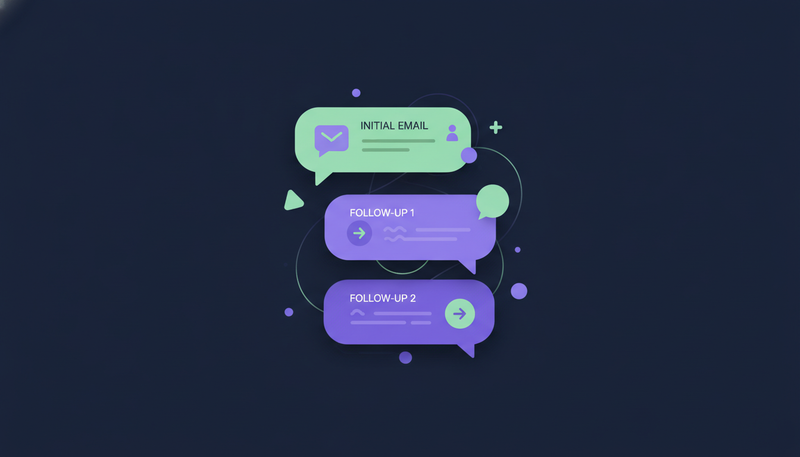
Early follow-ups: templates 1 to 4
1. The short reframe (day 3 or 4, leave the subject empty)
Hi, I wrote on Monday about helping your team spend less time on daily prospecting. Short version: we help sales teams reach the right people without doing it all by hand. Is outbound something you're working on this quarter?
2. The one question
Hi, one question instead of a pitch: who owns outbound at your company right now? If it isn't you, a name would help me a lot.
3. The easier ask
Hi, no call needed. If you can reply with a yes or no on whether outbound is a priority this quarter, I'll know whether to write again.
4. The relevant observation
Hi, I noticed your team is hiring for sales. When a team grows, outreach often gets stretched thin. Is anyone covering it consistently?
Follow-ups that add value: templates 5 to 8
5. The short example (day 8)
Hi, a common problem for sales teams is writing the same generic email to everyone and hearing nothing back. We write each message for the person it's going to. Does that sound familiar?
6. The useful resource
Hi, I put together a one-page note on why cold emails get ignored and how to fix the opening line. Want me to send it over? No strings.
Only use this one if you really have the note ready to send.
7. The different angle
Hi, I may have led with the wrong problem. Another reason teams talk to us is that leads, conversations and follow-ups end up spread across too many tools. Is that closer to what's on your plate?
8. The right person
Hi, if outbound isn't yours, could you point me to the person who owns it? A name is enough, and I'll keep my note short.
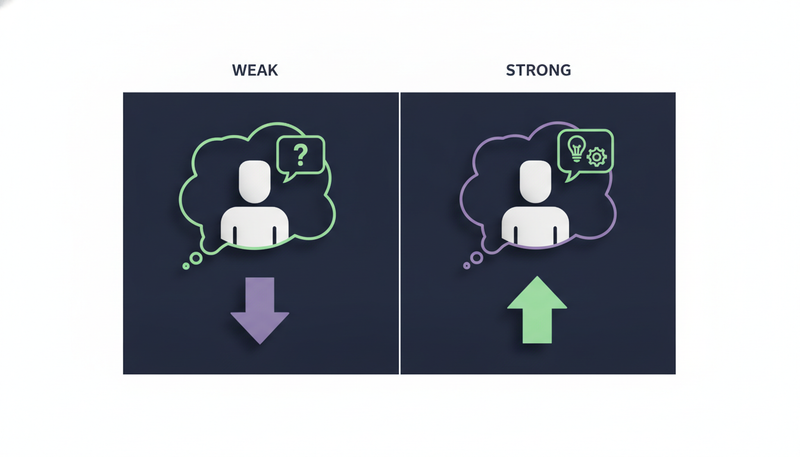
Closing and re-engaging: templates 9 to 12
9. The polite close (day 21)
Hi, I've written a few times and haven't heard back, which is fine. I'll stop here so I don't clutter your inbox. If outbound becomes a priority later, reply to this thread and I'll pick it up.
10. The permission close
Hi, should I close the loop on this? A simple 'not now' is a perfectly good answer.
11. The timing question
Hi, if the timing is wrong, tell me when to try again and I'll write then. Next month? Next quarter?
12. The re-engagement (weeks later, as a new email)
Hi, it's been a few months since my last note, so I'll keep this short. The timing may not have fit last time. Has outbound moved up your list since?
The last one is the only template that starts a new thread. Use it after a real gap, not as a sixth nudge.
Before you send any follow-up
- It adds one new thing: a question, an angle or an easier ask
- It is short enough to read on a phone without scrolling
- It asks one question, not three
- It includes one real detail about the person or company
- It sounds like you, not like a template
- The person has not replied, opted out or booked a meeting
- You will stop writing to anyone who asks you to
Writing a different follow-up for every lead is the part that eats the week. That is the part worth handing to software, with you still approving the result.
How do you follow up without damaging your sending domain?
Follow-ups multiply your volume. Five emails to 200 people is 1,000 emails, so the limits matter as much as the copy.
Every ZOROSDR plan sends up to 100 emails a day per mailbox and 50 LinkedIn actions a day per account, to keep those accounts safe. Messages go from your own connected accounts, not a shared server, so your outreach carries your own domain's reputation.
Leave warm-up on for new accounts. Check your sending domain's SPF, DKIM and DMARC setup too, and read the cold outreach mistakes that get accounts flagged before you scale.
How do you keep a person in control of every follow-up?
The fear is reasonable: an AI sends something wrong in your name. The fix is a human checkpoint, not hope.
In ZOROSDR, every first message lands in AI Admin as a draft. You read it, edit it, approve it or skip it, and nothing goes out until you do. When the AI doesn't know a fact, it says it will confirm instead of inventing one. If a draft keeps missing, add the missing fact to your brand voice's knowledge rather than rewriting it again and again.
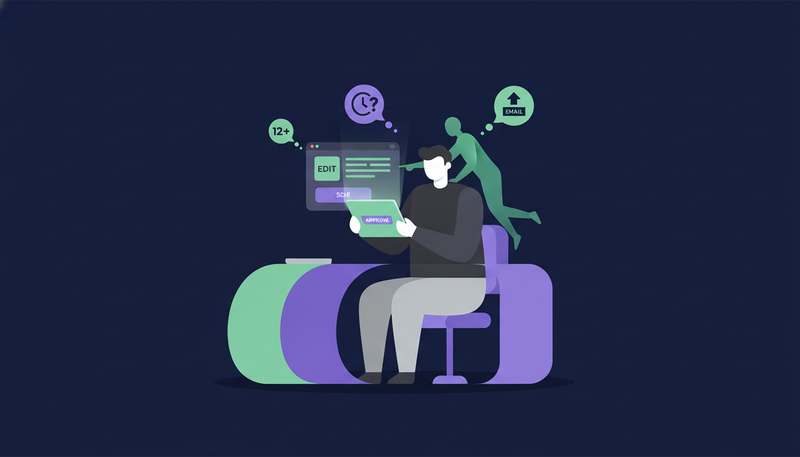
Replies work the same way. A reply stops the sequence, waiting drafts are withdrawn, and a suggested answer waits for you. Requests like 'stop' or 'unsubscribe' are caught by system rules before the AI reads the reply. You can read how the guardrails work.
Can you follow up on LinkedIn and WhatsApp too?
Yes. A second channel can reach people your inbox doesn't, and the follow-up logic stays the same: one new thing each time.
A LinkedIn message after an invite waits until the person accepts, for up to 21 days. A branch step can then send leads down different paths, for example a LinkedIn message if they accepted and an email if they didn't. The sequence stops for a lead as soon as they reply, opt out or book. For the full setup, see how to build a multichannel sales outreach sequence.
Frequently asked questions
How many follow-ups should I send after a cold email?
Three or four is a sound default, spread over about three weeks. That gives four or five emails in total. Adjust for your market and how well your list fits.
How long should I wait between cold email follow-ups?
Start with a gap of three or four days, then widen it. A schedule of day 1, day 3 or 4, day 8, day 14 and day 21 is a good starting point.
Should a follow-up be in the same thread?
Usually yes for the early ones, because the reader sees your first email below. Use a new subject line for a later follow-up with a new angle, or for a re-engagement after a long gap.
When should I stop following up?
Stop when the person replies, opts out or books a meeting. If they say stop or unsubscribe, stop at once. Otherwise, a closing note around day 21 is a clean place to end.
Summary
A good cold email follow up is short, comes at growing intervals, and adds one new thing each time. Plan on three or four, stop when the person replies, and keep a human approving what goes out in your name.
The quickest way to test this is to start the 14-day free trial and run one sequence. If you'd like to compare plans first, see the pricing.