You want to know how to stay GDPR compliant when scraping B2B leads, and every article you read seems to say something different.
The short answer: four things are mandatory for B2B prospecting under GDPR. First, document a Legitimate Interest Assessment (LIA) before you send anything. Second, email corporate addresses only, never personal ones like @gmail. Third, disclose where you got the person's data in email 1. Fourth, honor every opt-out immediately.
By the end you'll know how to write the assessment, which addresses to use, what email 1 should say and how to handle a stop request.
Corporate Emails vs. Personal Emails Under GDPR
Plenty of teams hear “B2B is exempt” and stop reading. It isn't. GDPR protects personal data, and anna.keller@company.com points to a real person even though it's a work address.
The real question is whether you can justify contacting that person. A corporate address tied to someone's job is where legitimate interest can hold up. A personal @gmail address is different: the person gave it out for private life, and a sales email lands outside what they expect.
Here's the catch: GDPR is only one layer. Unsolicited email is also governed by national rules, and some countries are stricter about B2B email than others. Check each country you target, and see our guide on whether cold email is legal under CAN-SPAM, GDPR and CASL. This article is general information, not legal advice.
| Corporate address | Personal address | |
|---|---|---|
| Example | anna@company.com | name@gmail.com |
| Link to the person's job | Clear | Usually none |
| What they expect | Offers relevant to their role | Private mail |
| Legitimate interest | Can be argued with a written LIA | Hard to defend |
| Your default | Contact, if the other rules are met | Leave it out |
How to Conduct a Legitimate Interest Assessment (LIA)
Legitimate interest is the legal basis most B2B outreach relies on. It isn't automatic, though. You have to show you thought it through, and that means writing it down.
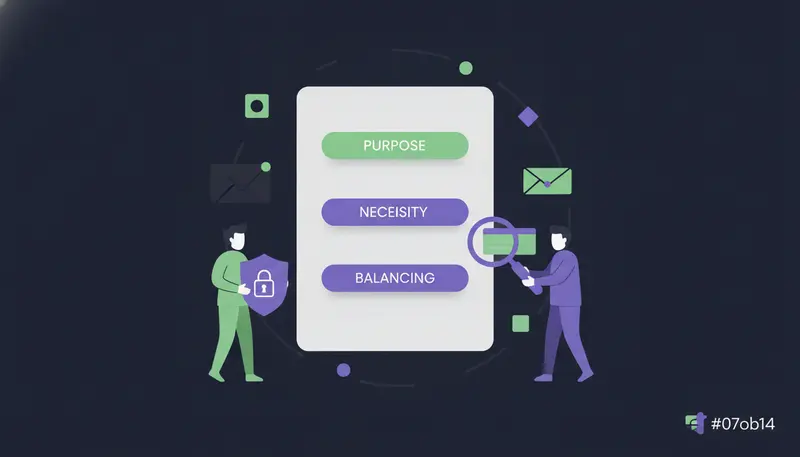
An LIA has three parts: your purpose, whether outreach is necessary for it, and whether the person's rights outweigh your interest. One or two pages is enough.
The next step is where most teams slip. They do the thinking in their heads and never record it. If a regulator or a prospect asks, “we considered it” is not an answer.
- 1State your purposeSay what you want and why, such as introducing a service to people who buy it as part of their job.
- 2Prove necessityExplain why email is a reasonable way to reach them and why you collect only name, role, company and work email.
- 3Balance the interestsAsk whether someone in that role would expect your email. If your offer has nothing to do with their job, the balance tips against you.
- 4Add safeguardsRecord how people opt out, how long you keep data and who can see it.
- 5Date and reviewSave it, note who approved it and revisit it when your targeting or message changes.
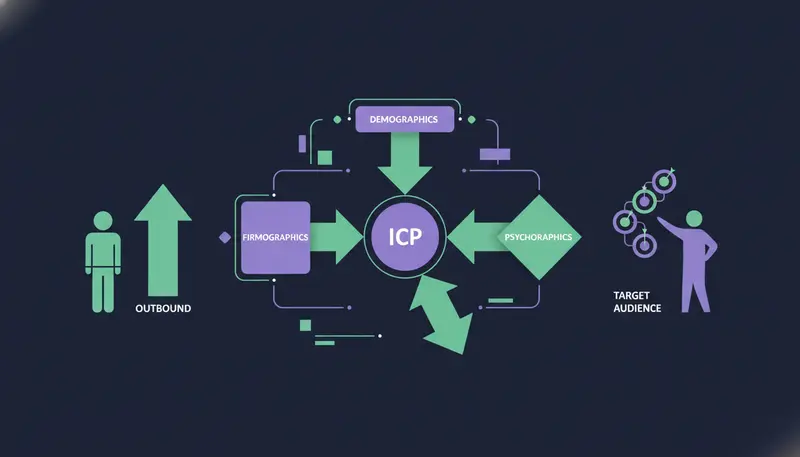
Targeting decides whether the balancing step passes. Emailing heads of sales about a sales product is easy to defend. Emailing everyone on a list is not. Our guide on how to build an ideal customer profile for outbound helps you tighten it.
How to Stay GDPR Compliant When Scraping B2B Leads: Know Your Source
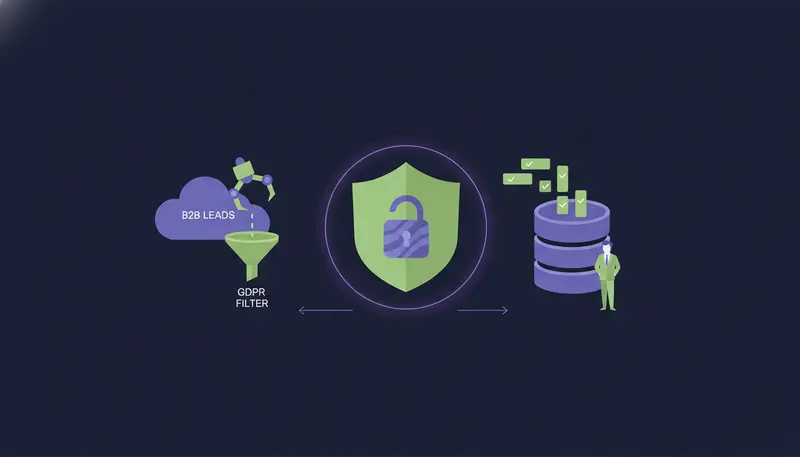
Collecting contact details from public pages is still collecting personal data. Public doesn't mean free to use, and GDPR duties apply to scraped data as much as to a list someone handed you.
Three questions keep you honest. Where did each record come from? Did that source's terms allow you to collect it? Can you still say where it came from in six months?
Keep a source note with every import: the page or file, the date and who added it. Collect only what you'll use, such as name, role, company and work email.
Location matters too. If you're based in Dubai and email people in the EU or UK, GDPR can still apply to you. When in doubt, ask a lawyer who knows those countries.
What to Disclose in Email 1
When you collect someone's data from somewhere other than them, GDPR expects you to tell them. For cold outreach, the simplest place is the first email, in a few plain lines near the end.
Say who you are, why you have their details and where you found them. Name the source in words they'd recognise, such as “your company's public website”. Add that you rely on legitimate interest and how to object.
A short version: “I found your details on your company's public website, and I'm writing because you lead sales there. If you'd rather not hear from me, reply stop and I won't write again.” Link your privacy notice for the full detail.
What email 1 should cover
- Who you are and the company you write from
- Why you're writing, in one line tied to their role
- Where you found their details, in plain words
- That you rely on legitimate interest
- How to opt out, where a reply of “stop” is enough
- Where to read your privacy notice
Here's the part people forget: the AI writes only from facts you gave it, so it won't know your source unless you tell it.
How to Honor Opt-Outs Immediately
Under GDPR, the right to object to direct marketing is absolute. When someone says stop, you stop. There's no “one last follow-up” and no waiting for the next batch.
That means catching the request wherever it arrives. “Stop”, “unsubscribe” and “remove me” can show up as an email reply, a LinkedIn message or a WhatsApp text. Every sequence for that person has to end, on every channel.
Then remember them. If you re-import the same list next quarter, an opted-out person must not come back.
In ZOROSDR, system-level rules catch “stop” and “unsubscribe” requests before the AI even reads the reply. A sequence also stops for a lead as soon as they reply, opt out, book a meeting or move to a closing stage. Our piece on what happens when a lead replies or unsubscribes shows the flow.
How a Careful Outreach Workflow Works in ZOROSDR
No tool makes you compliant on its own. The LIA, the lawful source and the privacy notice are yours to own. What software can do is make the careful path the easy one.
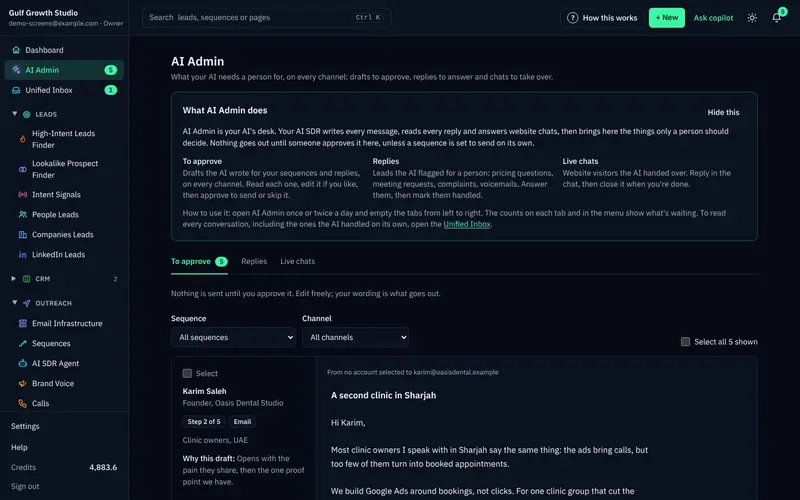
In ZOROSDR, every first message lands in AI Admin as a draft. A person approves, edits or skips it, so nothing goes out until someone has checked the source line, the relevance and the tone. The AI writes only from your brand voice and knowledge, and if it doesn't know a fact it says it will confirm. See the guardrails on approval, facts only and opt-outs.
Sending is built for restraint. Messages go out from your own connected accounts, not a shared server, inside each lead's working hours and within safe daily limits.
Targeting supports your LIA too. In Rules you write instructions the way you'd brief a new salesperson, one per line, such as “Only contact people who hold a sales or marketing role.” Searching for leads is free, and a work email costs a credit only when one is found.
Pre-Send GDPR Checklist for B2B Outreach
Most trouble comes from the same few slips: emailing personal addresses, skipping the written assessment, hiding the source, and treating an opt-out on one channel as separate from the rest. Run this list before every new campaign.
Before you press send
- LIA written, dated and saved
- Every lead has a source note
- Only corporate addresses on the list
- Targeting matches each person's role
- Email 1 names you, your source and how to opt out
- A person has read the draft
- Opt-outs stop every channel and stay suppressed
- Country-specific email rules checked
Frequently asked questions
Is B2B cold email legal under GDPR?
It can be. You need a lawful basis, usually legitimate interest backed by a written assessment, and you must be open about your source and honor opt-outs. National email rules differ, so check each country or ask a lawyer.
Can I scrape email addresses from company websites?
Collecting them is processing personal data, so GDPR applies. Check the site's terms, collect only what you need, record the source and name it in email 1. Public is not the same as free to use.
Do I need consent to send B2B emails?
GDPR itself doesn't always require consent when legitimate interest holds. Some countries' email rules are stricter, so confirm the rules where your leads are based.
Can I email someone's @gmail address?
Avoid it. A personal address isn't tied to the person's job, so a sales email falls outside what they'd expect and the balancing test is hard to pass.
How fast must I honor an opt-out?
Immediately. Stop every sequence for that person on every channel and keep a minimal suppression record so they aren't contacted again.
Summary
To stay GDPR compliant when scraping B2B leads, write your LIA, email corporate addresses only, name your source in email 1 and honor opt-outs at once. Run the checklist before each campaign. Then start the 14-day free trial to see approval-first outreach work with your own leads.