You want to send a first email to a prospect, but you're not sure a stranger's inbox is fair game. Is cold email legal, and do CAN-SPAM, GDPR and CASL change the answer from the US to Europe to Canada?
B2B cold email is legal in the US under CAN-SPAM and in Europe under GDPR via legitimate interest, as long as you are transparent, relevant and honor opt-outs. Canada is stricter: CASL requires express or implied consent before you send. The details matter, and they differ by country.
By the end you'll know what each law asks of you, where teams slip, and a checklist to run before every send.
Is Cold Email Legal? CAN-SPAM, GDPR & CASL Rules Explained
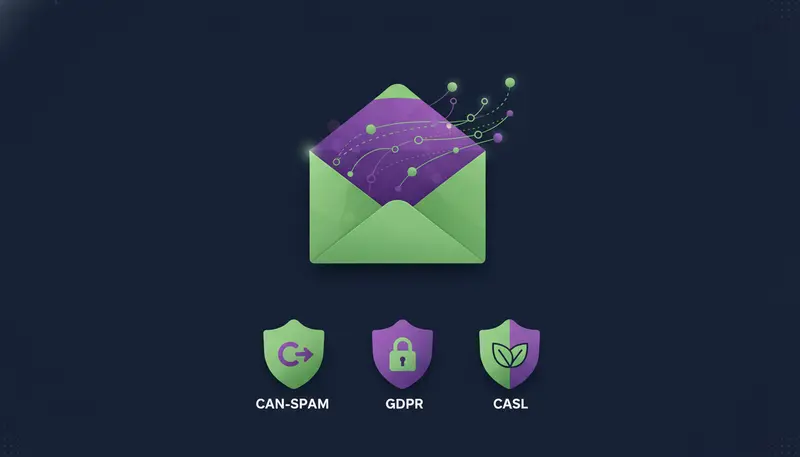
Three laws, three different starting points. The US lets you send first and stop on request. Canada wants consent first. Europe sits in between, with a lawful basis you have to document. Here are the cold email laws compared by region.
| Law | Region | Consent model | Mandatory requirements |
|---|---|---|---|
| CAN-SPAM | United States | Opt-out: no permission needed before the first commercial email | Honest sender and subject line, physical postal address, clear unsubscribe, opt-outs honored within 10 business days |
| GDPR plus national e-privacy rules | EU and EEA | Legitimate interest for B2B, documented; some countries require consent | Say who you are and where you got the data, target relevantly, make objecting easy, stop on request |
| CASL | Canada | Opt-in: express or implied consent you can prove | Sender name, mailing address and contact details, working unsubscribe honored within 10 business days |
This is general information, not legal advice. Rules change and national details vary, so ask a lawyer before you build a large campaign in a market you don't know.
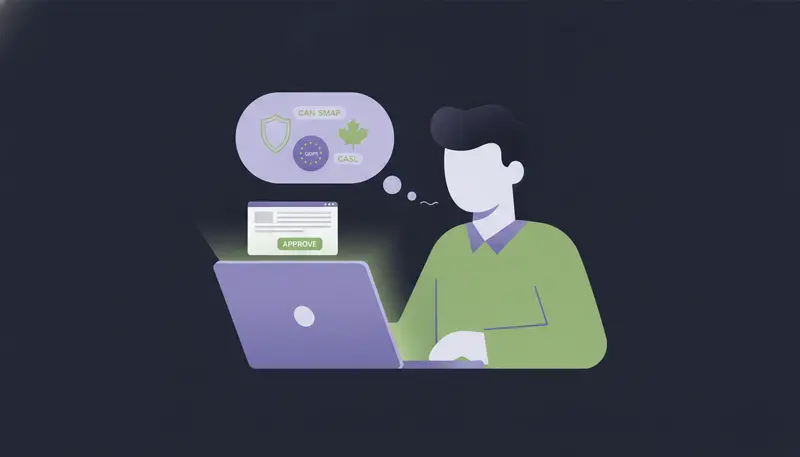
Is cold email legal in the US under CAN-SPAM?
Yes. CAN-SPAM covers commercial email and does not require permission before the first message. It applies to B2B email just as it does to consumer email, which surprises many founders.
The law governs how you send, not whether you may. Here's the catch: the rules are short, so breaches are usually careless ones, like a misleading subject line or a missing address. Penalties are counted per email, so a sloppy campaign adds up fast.
You also stay responsible when someone else sends for you. If an agency or a tool sends on your behalf, the duty can still sit with you.
CAN-SPAM checklist for each email
- The From name and sending address show who you really are
- The subject line matches what the email says
- The message is clearly a commercial pitch, not disguised as something else
- A valid physical postal address is included
- There is a clear, free way to opt out
- Opt-outs are honored within 10 business days
- Nobody who opted out is ever emailed again
Is B2B cold email legal in Europe under GDPR?
Mostly yes, with a condition. GDPR doesn't ban cold email. It asks for a lawful basis to use personal data, and a work address that points to a named person counts as personal data.
Why legitimate interest is the usual basis
For B2B outreach the basis is usually legitimate interest. You weigh three things and write them down: your purpose, whether email is needed to reach it, and whether the person's rights outweigh your interest.
Relevance carries that test. A finance director receiving an offer for finance software is easy to defend. A random employee receiving a generic pitch is not.
What you must tell people
Say who you are, why you have their details and how to object. People have the right to object to direct marketing, and you have to stop when they do.
What does Canada's CASL require before you send?
Here's where it gets stricter. CASL is opt-in: you need consent before sending a commercial message to someone in Canada, and you carry the burden of proving it.
Express consent is a clear yes from the person. You can't ask for it by cold email, because the request is itself a commercial message.
Implied consent is narrower, and it's the route cold outreach usually relies on. It comes from an existing business relationship, or from a work email address that is conspicuously published with no note saying the person doesn't want unsolicited messages. Your message must also relate to their role.
In practice the two kinds look like this.
| Express consent | Implied consent | |
|---|---|---|
| How it arises | The person clearly agrees, by form or reply | It comes from the situation, like a published work address or a past relationship |
| What you keep | When and how they agreed | Where you found the address and why your message fits their role |
| Duration | Lasts until they withdraw it | Relationship-based consent can lapse |
| Fit for cold outreach | Rare as a first step | The usual route, if you can document it |
Whichever you use, each message needs your name, mailing address and contact details, plus a working unsubscribe that you honor within 10 business days.
What do all three laws have in common?
Under the differences sits one pattern. Honest sender details, a relevant message and an opt-out that works appear in every law. Build one baseline around them and you have a safe starting point, though not a substitute for advice on a specific country.
- 1Target by rolewrite only to people whose job makes your offer relevant, and note why.
- 2Identify yourselfuse your real name, company and postal address in every message.
- 3Keep the subject honestit should describe what the email contains, nothing more.
- 4Add an easy exita clear opt-out that costs nothing and needs no login.
- 5Stop everywherewhen someone says no, end every sequence for that person on every channel.
- 6Keep recordssave where you found each address, why you wrote, and when someone opted out.
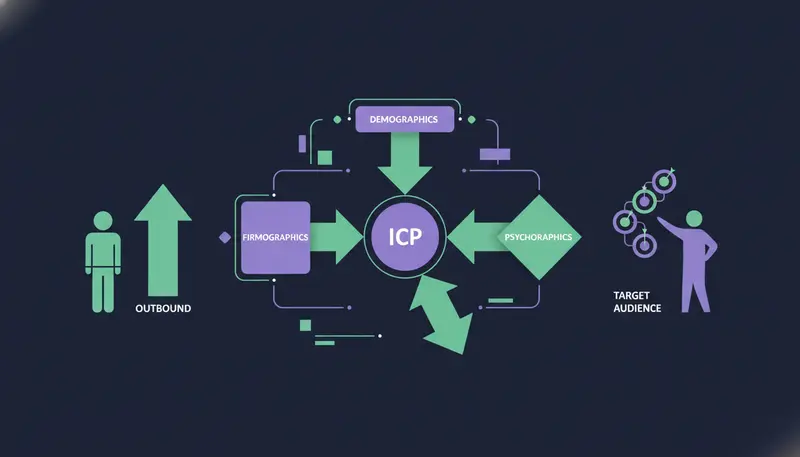
Relevance starts with knowing who you want to reach. Our guide on building an ideal customer profile for outbound walks through it.
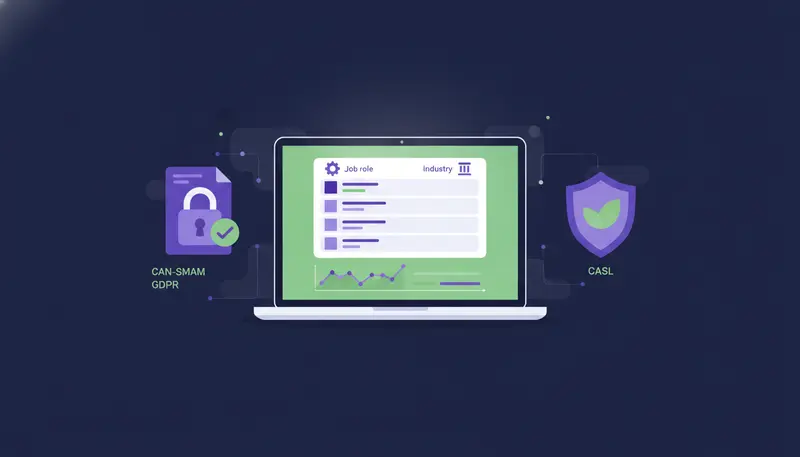
How should you handle opt-outs and replies?
Opt-outs are the one promise every law shares, so this is where teams get hurt. Two habits cause most of the trouble.
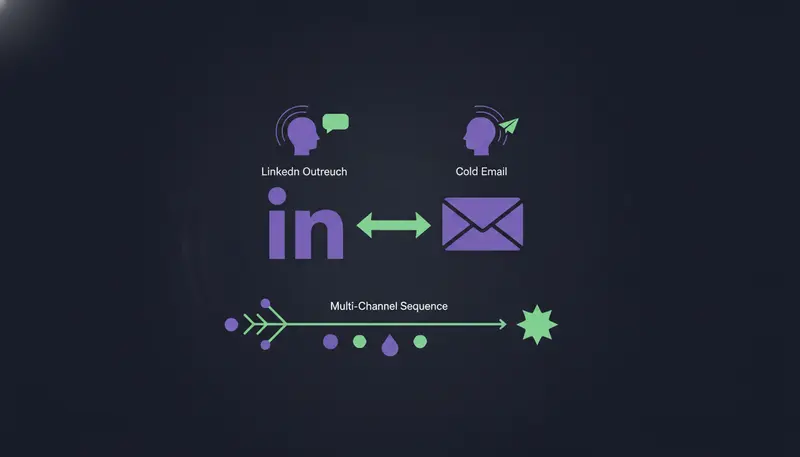
Someone writes 'please remove me' in a sentence instead of clicking the unsubscribe link, and nobody catches it. Or someone opts out by email and still gets a LinkedIn message the next day.
Treat any clear no as a stop for every channel and every sequence. We explain the mechanics in what happens when a lead replies or unsubscribes.
How can your outreach tool help you stay inside the rules?
No software makes you compliant on its own. The law holds the sender responsible. But the right setup removes common mistakes.
In ZOROSDR, every message lands in your inbox as a draft that a person approves, edits or skips. The AI writes only from your brand voice and the knowledge you gave it, so it states no fact you didn't supply. A clear 'stop' or 'unsubscribe' is caught before any AI reads the reply, other ways of saying no are caught by reply triage, and the sequence stops for that person on every channel. Read more on the guardrails page.
Messages go out from your own connected accounts, in each lead's working hours, with daily limits that keep accounts safe.
WhatsApp and SMS carry their own consent rules, which this article doesn't cover. If you import a CSV, you can record consent in a column, but only mark it when it's true.
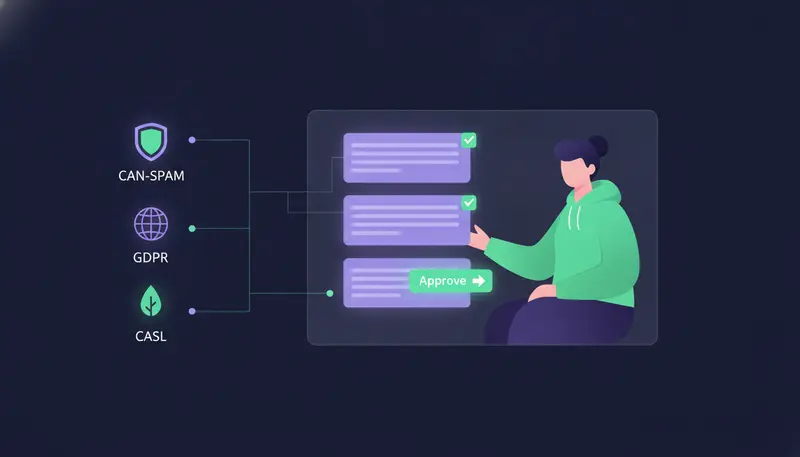
Your pre-send checklist for cold email
Technical setup counts too: a separate sending domain with SPF, DKIM and DMARC in place. Our guide on setting up cold email infrastructure from scratch covers it. Then run this list.
Before you send
- The person's role matches your offer, and you can say why
- Your name, company and postal address are in the email
- The subject line is honest
- The opt-out is clear and works
- For Canada, implied or express consent is on record
- For Europe, your legitimate interest is documented and the country's e-privacy rules are checked
- Anyone who opted out is excluded on every channel
- A person has read the message before it goes out
Frequently asked questions
Is B2B cold email legal in the US?
Yes. CAN-SPAM does not require permission before the first email. You must use honest sender and subject details, include a postal address, give a clear opt-out and honor it within 10 business days.
Do I need consent to cold email people in Europe?
Not always. Under GDPR, legitimate interest can cover relevant B2B outreach if you document your reasoning and tell people how to object. National e-privacy rules differ, and some countries, such as Germany, are stricter.
Can I cold email people in Canada?
Yes, with consent. CASL allows implied consent in limited cases, such as a conspicuously published work address with no refusal notice and a message relevant to the person's role. You must be able to prove it.
Does using an AI tool change who is responsible?
No. The sender stays responsible for every message. A tool can help by keeping a person in the approval step and stopping sequences when someone opts out, but compliance remains your job.
What should I do when someone asks me to stop?
Stop on every channel and in every sequence. Under CAN-SPAM and CASL you have 10 business days at most, and under GDPR the right to object to direct marketing means you must stop when asked.
Summary
B2B cold email is legal in the US and Europe when you are transparent, relevant and honor opt-outs, and Canada needs consent you can prove. Build one baseline, keep records, and have a person approve each message. To see how that works in practice, start the 14-day free trial. No card is needed.