You pick up the phone, say a polite hello and hear the click before your second sentence. Cold calling scripts that actually work in B2B sales don't try to charm a stranger; they ask for a moment, name a problem the buyer recognises and move toward a calendar slot.
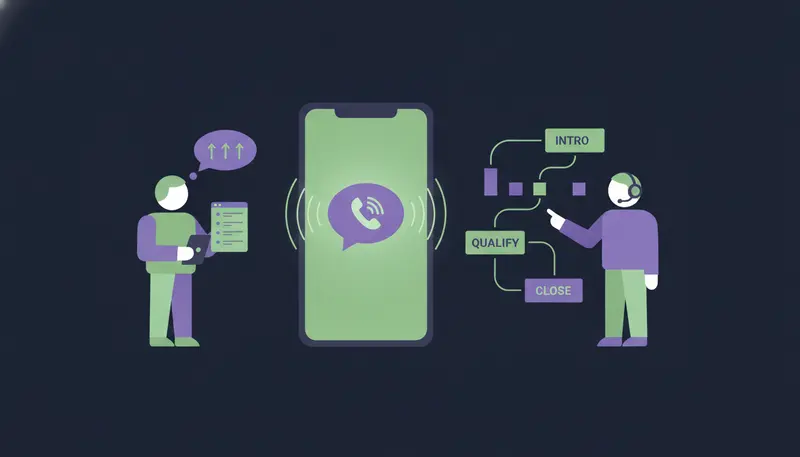
A modern cold call has four parts: a pattern-interrupt opener that asks permission, a problem statement backed by what peers tell you, one diagnostic question, and a calendar close. Each part is a sentence or two. Together they stay short and give the buyer an easy way to say yes or no.
By the end you will have three opening lines, a full call script you can adapt, answers to the usual brush-offs and a checklist to run before you dial.
Why “How Are You Today?” Kills Cold Calls Immediately
The question sounds polite. To a busy buyer it sounds like a script, because it is one.
“How are you today?” is the opener every salesperson has heard, so the buyer knows a pitch is coming. It asks for nothing specific and gives them nothing to react to.
It also hides who you are and why you called. A stranger with no context has two safe moves: end the call or say “send me an email.”
Here's the catch: a friendlier voice won't fix it. The first sentence has to do a different job. It should give your name and company, admit this is a cold call and ask for a short moment.
| The old opener | The modern opener | |
|---|---|---|
| First words | “How are you today?” | Your name, company and “this is a cold call” |
| What it asks for | Nothing specific | A short moment of attention |
| Easy answer for the buyer | “Not interested” | “Go ahead” or “Not now” |
| What it sets up | A pitch | A question |
The 4-Part Modern Cold Call Structure
Every call that goes somewhere follows the same order. The words change with your market; the sequence does not.
- 1Pattern-interrupt openerSay who you are, admit it is a cold call and ask for permission. The honesty breaks the usual sales-call pattern and lowers the buyer's guard.
- 2Problem statement with peer proofName one problem people in their role face, in their words. Mention a peer only if it is true.
- 3Diagnostic questionAsk one open question about how they handle it today, then stop talking.
- 4Calendar closeIf the answer shows a fit, offer two specific times and send the invite while you're still on the line. If not, say so and end politely.
Each part has one job. If one part tries to do two, the call runs long and the buyer drifts.
Skip a part and you can feel it. Without the diagnostic question you are pitching blind. Without the close, a good conversation ends with “let's stay in touch.”
3 Permission-Based Opening Lines for B2B Cold Calls
Say your name and company first, then use one of these. Read each aloud and keep the one that sounds like you.
The honest interruption
“I know this is out of the blue. Can I tell you in a few sentences why I called, and you decide if it's worth more of your time?”
It admits the interruption and hands control to the buyer.
The direct permission ask
“I'm calling cold, so I'll be quick. Do you have a minute, or should I try another time?”
Offering a way out makes staying easier. People rarely resist a call they are allowed to end.
The reason-for-calling opener
“I'm calling because your team looks to be hiring for sales, and that often means the pipeline has to grow faster than the team can. Is that where you are, or am I off?”
Use this only when the signal is real and you have seen it yourself. Hiring and funding are two examples of buying signals worth watching.
A Full Cold Calling Script That Actually Works in B2B Sales
Here is one complete call, in order. Swap in your own company, role and facts, and use a problem you really hear in your market.
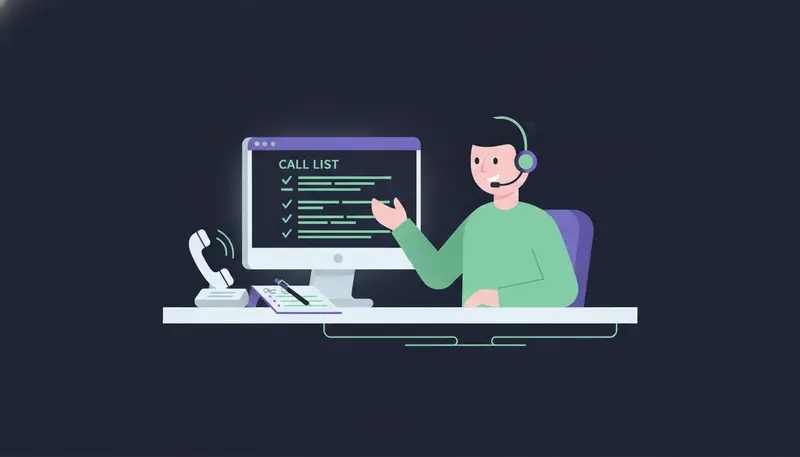
Part 1: the opener
Say your name and company, then: “I'm calling cold, so I'll be quick. Do you have a minute, or should I try another time?”
Part 2: the problem statement
“A problem I hear from sales leaders is that prospecting is the first thing to slip when the team gets busy. Is that familiar?”
If the answer is yes, you have earned the next question. If it's no, ask what comes first for them instead.
Part 3: the diagnostic question
“How are you handling prospecting right now, and who owns it?” Then: “What happens to it in a busy month?”
Stay quiet after you ask. The answer is the call.
Part 4: the calendar close
“That sounds worth a proper look. I have Tuesday at 10 or Thursday at 2. Which is easier? I'll send the invite while we're talking.”
If the answers show no fit, say so: “It sounds like this isn't a priority right now. Thanks for your time.” You keep the door open and the buyer remembers that you didn't push.
Write the Problem Statement With Honest Peer Proof
Peer proof works because buyers trust people like themselves more than a vendor. It collapses the moment it sounds invented.
Use this pattern: the role, the problem in their words, the cost of leaving it alone. Sales teams put it like this: “we don't have the time or people to prospect every day,” or “our outreach is generic and nobody replies.”
If you have no customer you can name, state the problem plainly. That beats a made-up reference every time.
Handling the Three Most Common Brush-Offs
Brush-offs are usually reflexes, not decisions. Answer once, calmly, with a question.
“Send me an email”
“Happy to. So it's useful, what's the one thing you'd want it to cover?”
“We already have someone for that”
“Fair enough. I'm not asking you to switch. How is it working for you at the moment?”
“I'm busy right now”
“Understood. Is tomorrow morning or afternoon better for a quick call?”
The next step is where most teams slip: they keep pushing after a clear no.
Voicemail and Follow-Up When Nobody Picks Up
Most dials won't connect, so plan the voicemail and the next touch before you start.
Keep the voicemail short: your name and company, one line on why you called, one question and your number. Skip the full pitch.
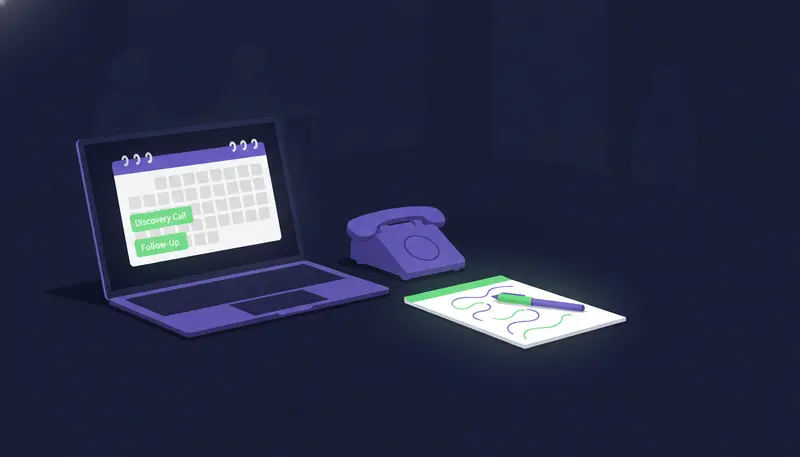
Then follow up on another channel the same day, with a message that refers to the call. A sequence can mix email, LinkedIn, WhatsApp, calls and SMS. In ZOROSDR, a sequence stops for a lead as soon as they reply, opt out, book a meeting or move to a closing stage.
Who You Call Matters as Much as What You Say
A sharp script on the wrong list still fails. Start with a clear ideal customer profile and, where you can, call people at companies showing buying signals such as hiring or funding.
ZOROSDR has two prospect finders. The Lookalike Prospect Finder finds companies and people like your best customers. The High-Intent Leads Finder finds decision makers at companies in a buying moment.
An AI call step in a sequence is a brief for your AI caller, not a message the lead reads. Nothing goes out until a person presses “Approve and call,” and a call approved outside calling hours waits until they open.
Every new workspace starts with test allowances, so you can check lead quality before you spend anything:
Before You Dial: A Pre-Call Checklist
Rules on cold calling differ by country, so read B2B cold calling laws and do-not-call lists before you build a list. Then run this check.
Pre-call checks
- You know why you're calling this person, from your ideal customer profile or a buying signal
- Your opener gives your name, your company and “this is a cold call”
- One problem statement, in the buyer's words
- One diagnostic question, written down
- Two real time slots free in your calendar
- The number is cleared against any do-not-call list that applies
- A voicemail and a follow-up message are ready
- You have a place to log the outcome straight after
Frequently asked questions
What is a good cold call opening line for B2B?
A good opener gives your name and company, admits it is a cold call and asks for a short moment. For example: “I'm calling cold, so I'll be quick. Do you have a minute, or should I try another time?”
How long should a B2B cold call script be?
Short enough that each of the four parts is a sentence or two. The script is there to start a two-way conversation, not to be read through.
How do you book a meeting on a cold call?
Ask one diagnostic question, listen, and if there is a fit, offer two specific times and send the invite while you're still on the line. If there is no fit, say so and end politely.
Can AI make cold calls?
ZOROSDR has an AI call step you can add to a sequence. It works from a brief and your own facts, and a person approves each call before it is made. The team can confirm the details for your use case.
Summary
A cold call that books meetings asks permission, names a real problem, asks one good question and closes on a specific time. Write your four parts, say them aloud and call a list that fits.
If you want a second pair of eyes on your sequence, book a demo.