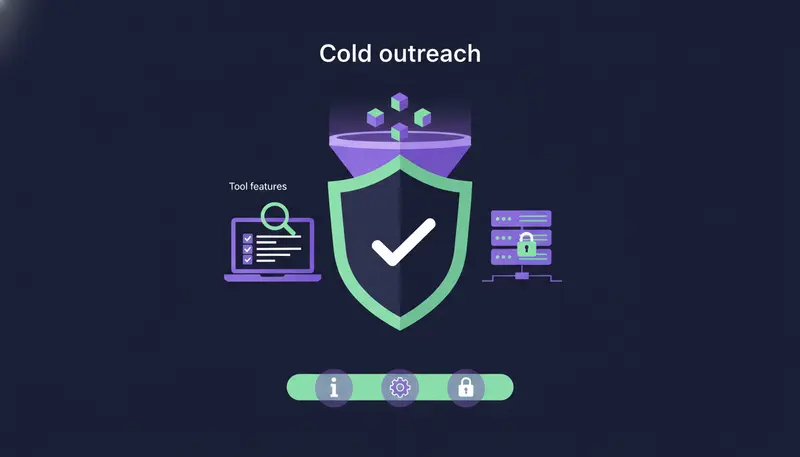
You've been told to keep your outreach GDPR compliant, and every tool's website says it already is. The straight answer on gdpr compliant cold outreach is that no tool is compliant by itself, but the right one makes safe behaviour automatic, and you can test that with a handful of questions.
By the end you'll have a checklist to put to any vendor, a way to judge the answers, and a clear view of what stays your job under GDPR and the UAE's PDPL.
Is any cold outreach tool GDPR compliant on its own?
No. A tool is software. Compliance is about what you do with personal data: who you contact, on what basis, what you tell them, and how fast you stop when they say no.
Vendors often use 'GDPR compliant' as a label, and it can mean very little. It might mean a privacy page exists. It might mean the vendor looks after its own staff data properly. Neither tells you whether your campaign is lawful.
What a tool can do is help. It can stop a message going out by mistake, honour an opt-out without anyone having to remember, erase a person on request and keep a record of it. That is the part you can check before you buy.
So the useful question changes. Not 'is this tool compliant?' but 'does this tool make it easy for me to be?'
What do GDPR and PDPL ask of cold outreach?
Both laws start in the same place: a work email address tied to a named person is personal data. Everything else follows from that.
GDPR in plain words
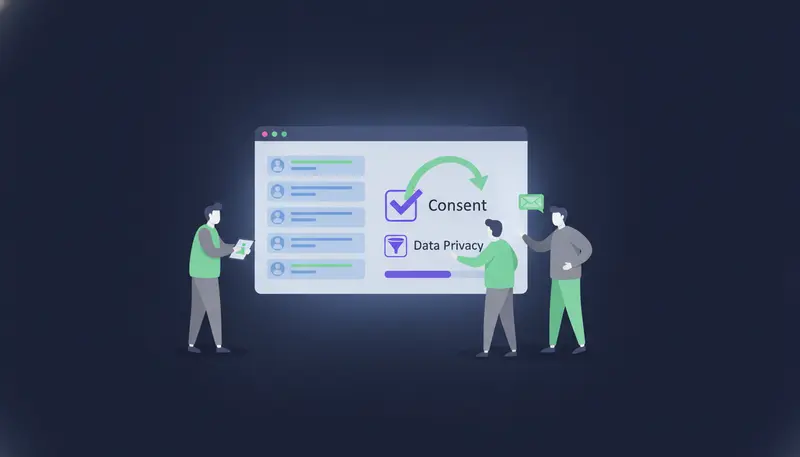
You need a lawful basis for contacting someone. Many B2B teams rely on legitimate interests, which means weighing your interest against the person's rights and writing that down. It isn't automatic. People can also object to direct marketing, and when they do, you stop. You should be able to tell them where you got their details.
The UAE's PDPL in plain words
The UAE has its own data protection law, the PDPL. It is not a copy of GDPR, and its approach to lawful basis and consent differs. If you contact people in the UAE or hold their data, ask a local adviser how it applies to your list. Here's the catch: a tool designed around one regime can leave gaps in another, so don't assume.
Anti-spam rules sit on top
Email, SMS, WhatsApp and calls each have their own rules, and they change by country. Our guide to cold email rules under CAN-SPAM, GDPR and CASL covers email. The sourcing side is in how to stay GDPR compliant when scraping B2B leads.
| What the tool does | What you still do | |
|---|---|---|
| Opt-outs | Catches stop requests and records them | Decide who to contact and respect every objection |
| Data requests | Exports or erases a person | Answer the person and decide your lawful basis |
| Writing | Drafts in your voice from your facts | Read and approve what goes out |
| Sending | Sends from your own connected accounts | Keep targeting and volume reasonable |
| Records | Logs opt-outs, erasures and exports | Keep your own notes on why you contact a group |
What does GDPR compliant cold outreach look like in a tool?
Look for features that remove human error. Policies are easy to write. Behaviour is what counts. Here are the questions worth putting to any vendor, in writing if you can.
Questions to put to any vendor
- Are stop and unsubscribe replies caught automatically, before any AI or person drafts an answer?
- Can you export or erase one person, and export the whole workspace?
- Is there a record of opt-outs, erasures, exports and deletion requests?
- Does it send from your own connected accounts or from shared servers?
- Does a person approve messages before they go out?
- Is the AI limited to facts you gave it, or can it invent them?
- Are workspaces kept apart so one client's data never mixes with another's?
- What happens to your data when you delete the workspace?
Written answers matter. If your legal team needs a formal security questionnaire, ask the vendor for it. At ZOROSDR, a person from the team follows up on those.
How do you judge a vendor's answers?
A good answer is specific and checkable. A weak one is a badge, a slogan or 'we take privacy seriously'.
The quickest way to tell them apart is to test. Run these steps during a trial, before any real list goes in.
- 1Ask in writingsend the checklist by email so the answers are on record.
- 2Read the security pagelook for specifics, such as how workspaces are separated and what you can export, not just badges.
- 3Test an opt-outsend yourself a message from a trial workspace and reply 'stop' from a second address.
- 4Test an erasureadd a test contact, erase it, then try to import it again.
- 5Run a small batchcontact a short list you know well, and read every draft before approving.
- 6Get sign-offshow your lawyer or data protection contact the answers and what you saw.
How should opt-outs work in an AI outreach tool?
Opt-outs are where AI tools can go badly wrong. A person writes 'stop', the AI reads it as a normal conversation and replies with another pitch. That is the worst case under both laws, and a fast way to lose trust.
The safer design catches the request before any AI reads it. In ZOROSDR, system-level rules catch stop and unsubscribe replies first, so there's no accidental follow-up. Replies to leads also always wait for a person.
Ask any vendor for the order of events. Does the opt-out rule run first, or does the AI decide? If they can't say, treat that as an answer.
Can the tool erase or export a person's data?
GDPR gives people rights over their data, including the right to object and to ask for erasure or a copy. The PDPL has data subject rights of its own. Whatever the detail, you need a tool where handling a request takes minutes, not a support ticket.
ZOROSDR has privacy tools for this. You can export or erase a person, export the whole workspace, and delete a workspace with a 30-day grace period. Erased people can't be imported again, which matters because an old CSV is how erased contacts come back. There's also a record of every opt-out, erasure, export and deletion request.
These tools help with the UAE's data protection law, the GDPR and anti-spam rules. They don't replace your own judgement or your lawyer. Details are on the security and privacy page.
Where do your messages come from, and who else sees the data?
Some platforms send through shared servers, which mixes your reputation, and your risk, with strangers'. Ask where your messages actually leave from.
ZOROSDR sends through your own connected accounts, such as Gmail, Outlook and LinkedIn, so your outreach comes from your own domain with your own authority. It has built-in checks for SPF, DKIM and DMARC alignment, plus automated bounce handling. Sequences send within the lead's local working hours and respect safe daily platform limits.
On data protection: workspaces are kept apart with row-level security, and there are roles for owners, admins, members and viewers. Tokens for connected tools are encrypted before they're stored, and everything travels over HTTPS.
Deliverability isn't strictly a legal question. A clean setup is still part of being a careful sender.
Does human approval make outreach safer?
The risk with AI outreach isn't only data. It's a wrong sentence sent in your name. A message that states something false about your company, or about the person, is a problem under any law and plain bad manners.
In ZOROSDR, every initial message lands in your inbox as a draft, and nothing goes out until a person approves, edits or skips it. The AI writes from your website and knowledge and is locked to it. If it doesn't know a fact, it says it will confirm rather than inventing one. The guardrails page explains how this works.
It also gives a human the moment to ask the bigger question: should this person be contacted at all?
What changes if you run outreach for clients?
Agencies carry two loads: their own compliance and their clients'. The key question is whether each client's data stays separate.
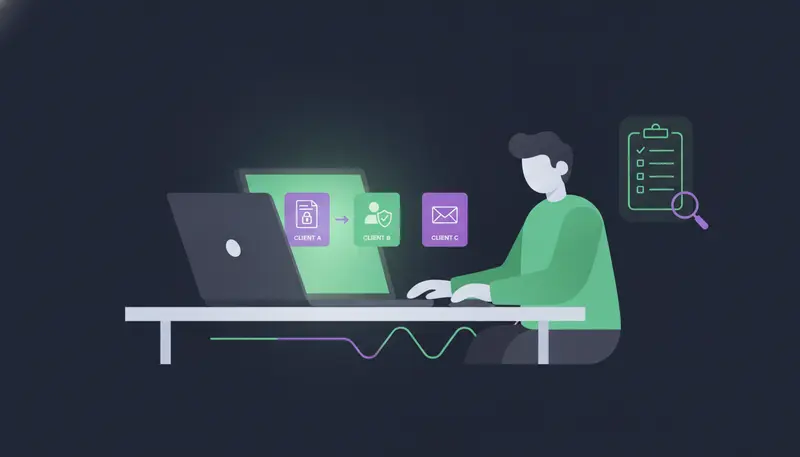
On the ZOROSDR Agency plan, each client gets their own workspace with their own leads, sequences, inboxes and brand voice, and nothing mixes between clients. You set each client's monthly credits, sending accounts and people, and exactly what their team can do. The system refuses anything they aren't allowed to do. Pausing a client stops everything without deleting anything.
Who is responsible for what between you and a client is a legal question. Settle it in writing with your lawyer.
How do you test a tool before you connect a real list?
A free trial is the right place to run all of the checks above. Use a short list of people you know, such as colleagues, and send to them first.
Every ZOROSDR workspace starts with a 14-day free trial of every tool, no card needed, and you can cancel at any time. New workspaces also get credits to test with.
When the test is done, write down what you saw: how the opt-out behaved, how erasure worked and what the records showed. That note is useful for your legal contact and for the next vendor you compare.
Frequently asked questions
Is cold email allowed under GDPR?
It can be, depending on the country, the person and your lawful basis. Many B2B teams rely on legitimate interests with a clear way to opt out. Rules differ by country, so check your own case with a lawyer.
Does the PDPL apply to B2B cold outreach?
Business contact details tied to a named person are personal data, so the UAE's data protection law can apply. It differs from GDPR, so ask a local adviser how it fits your list.
Which cold outreach tools are GDPR compliant?
None is compliant on its own. Compliance depends on how you use it. Judge tools on opt-out handling, erasure and export, sending method, human approval and records. For formal questionnaires, a person from the ZOROSDR team will follow up.
Does ZOROSDR send messages without approval?
No. Every initial message arrives as a draft and nothing is sent until a person approves it. Replies to leads always wait for a person too.
Can I try it before I pay?
Yes. There's a 14-day free trial of every tool with no card needed, and you can cancel at any time.
Summary
No cold outreach tool is GDPR or PDPL compliant on its own. Your job is the list, the basis and the message. The tool's job is to make opt-outs, erasure, approval and records easy to get right.
Put the checklist to every vendor, test the answers in a trial, and ask a lawyer about your own case. When you're ready, start the 14-day free trial or book a demo and run the checks on ZOROSDR.